Creative & Scholarly Research
Exploring the intersection of physical and digital worlds, my work uses visual communication, immersive media, and emerging technologies to make complex and often invisible systems perceptible. Drawing on technoetics and whole-systems thinking, my research investigates the interconnected relationships among humans, technology, and ecological systems by using combinations of digital and analog media to examine environmental change, human intervention, and more-than-human networks.
Presence Interference
Presence Interference explores the energetic relationships between humans and the living environment through an immersive, interactive installation inspired by the water cycle of California’s coastal redwood forests. Drawing on biophotonics, technoetics, and ecological systems, the work uses 360° long-exposure imagery, projected light, and a geodesic structure to create an evolving, abstract forest ecosystem.
As viewers move through the space, their proximity to the structure triggers changes in the projected environment. Each participant becomes both transmitter and receiver, creating a feedback loop between human presence and the simulated ecology. By making these otherwise invisible interactions perceptible through light, movement, and projected imagery, Presence Interference considers how human presence influences, and is influenced by, the environments we inhabit.
Presence Interference was exhibited as part of Interstices, the D.A.N.M. MFA Exhibition at UC Santa Cruz in April 2018, and at Felix Kulpa Gallery in downtown Santa Cruz from January–March 2019.
Presence Interference multimedia installation using projections featuring an animation composed of long exposure photography, audio-scape and spatial depth map interfaced by a Kinect and a custom program written in MAX/MSP. Sculpture composed of custom geodesic dome skinned with see-through theater scrim. Accompanied by a series of light painted, photographic studies.


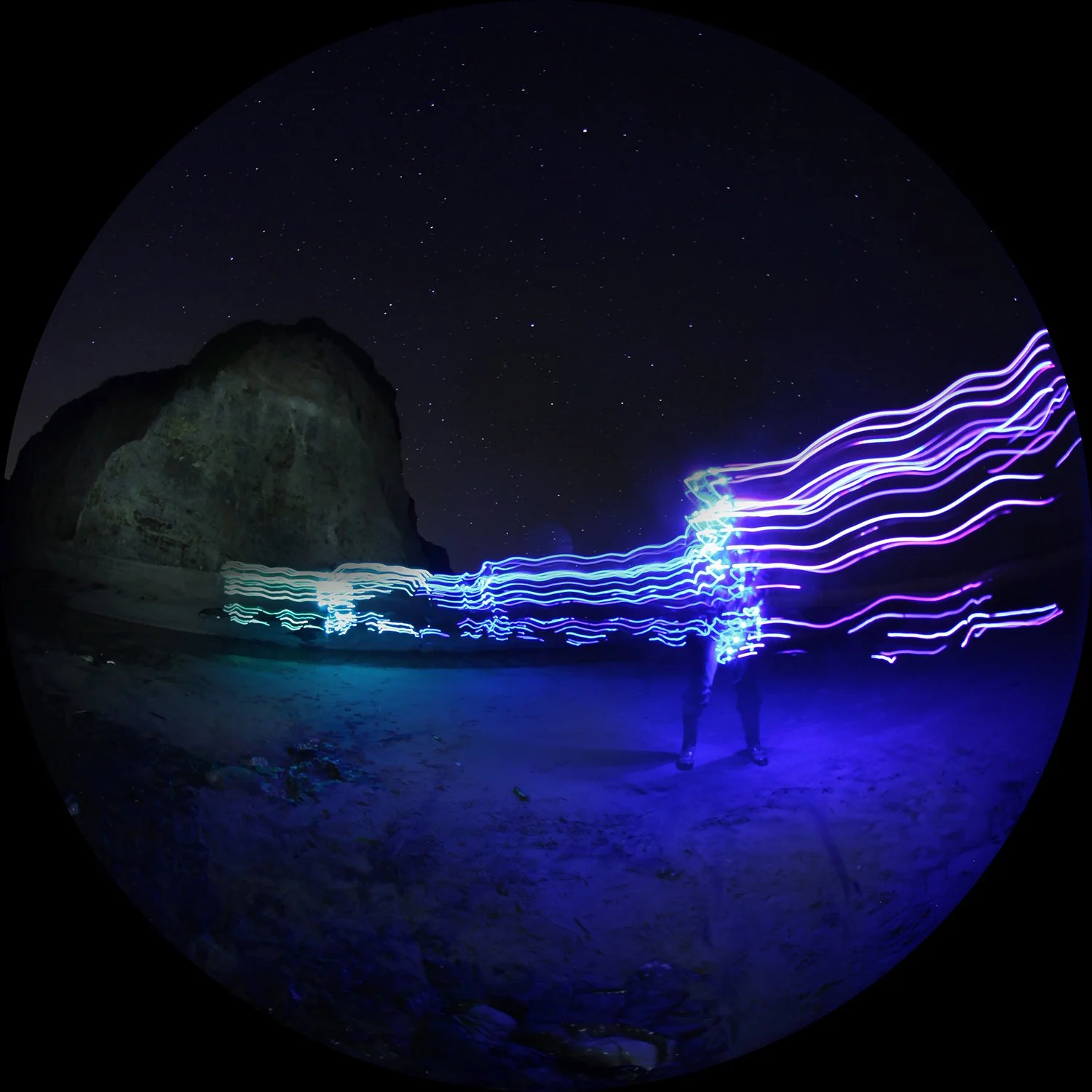
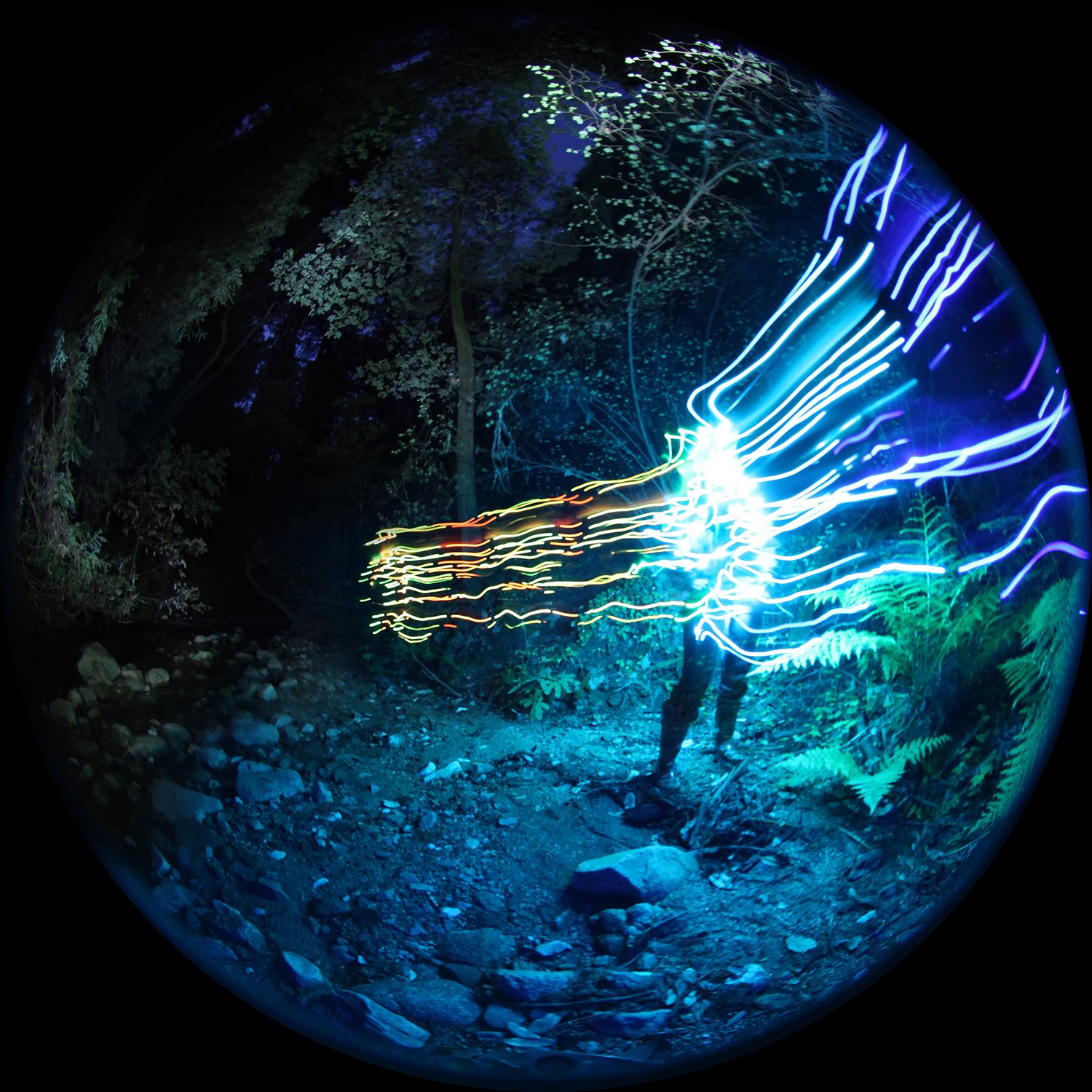
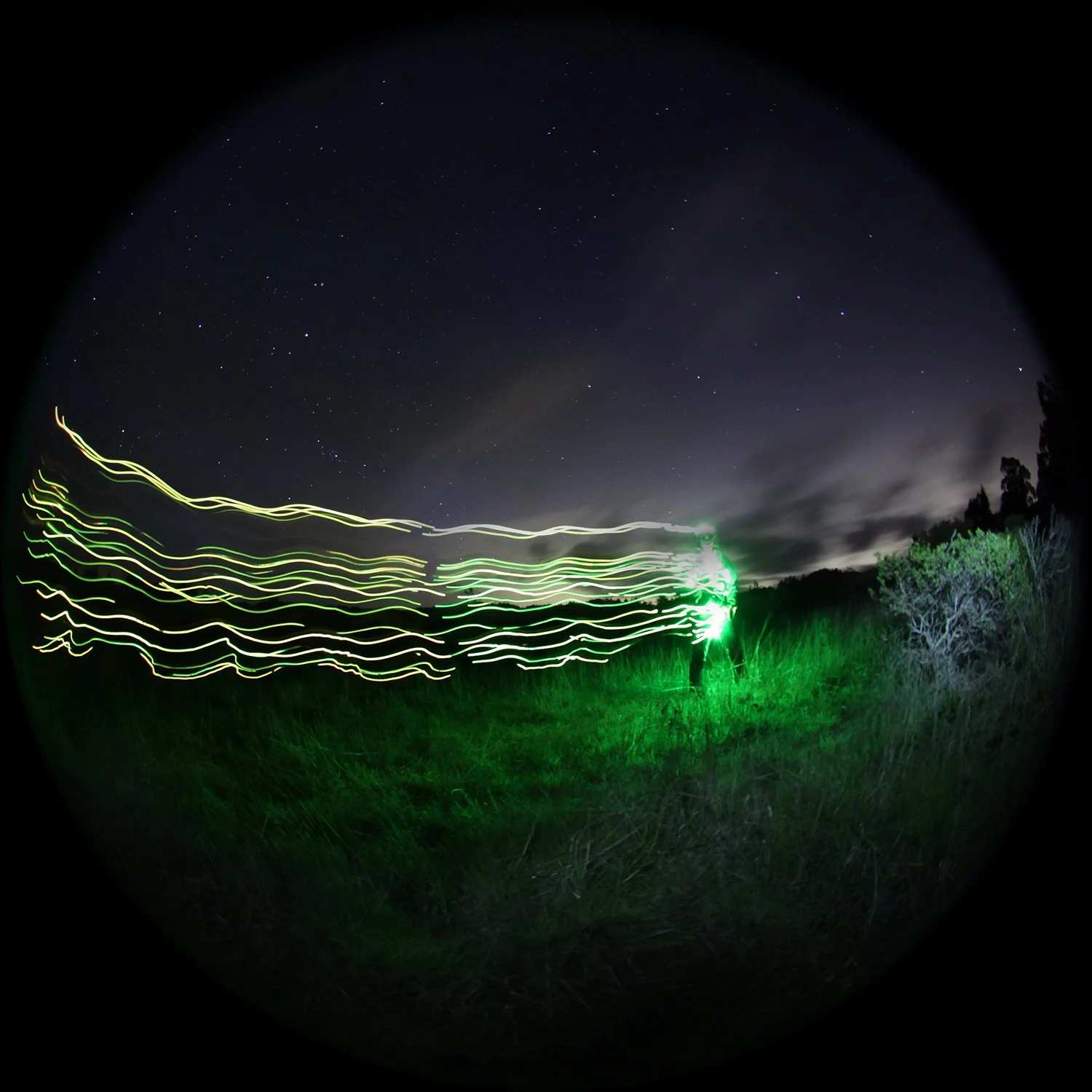
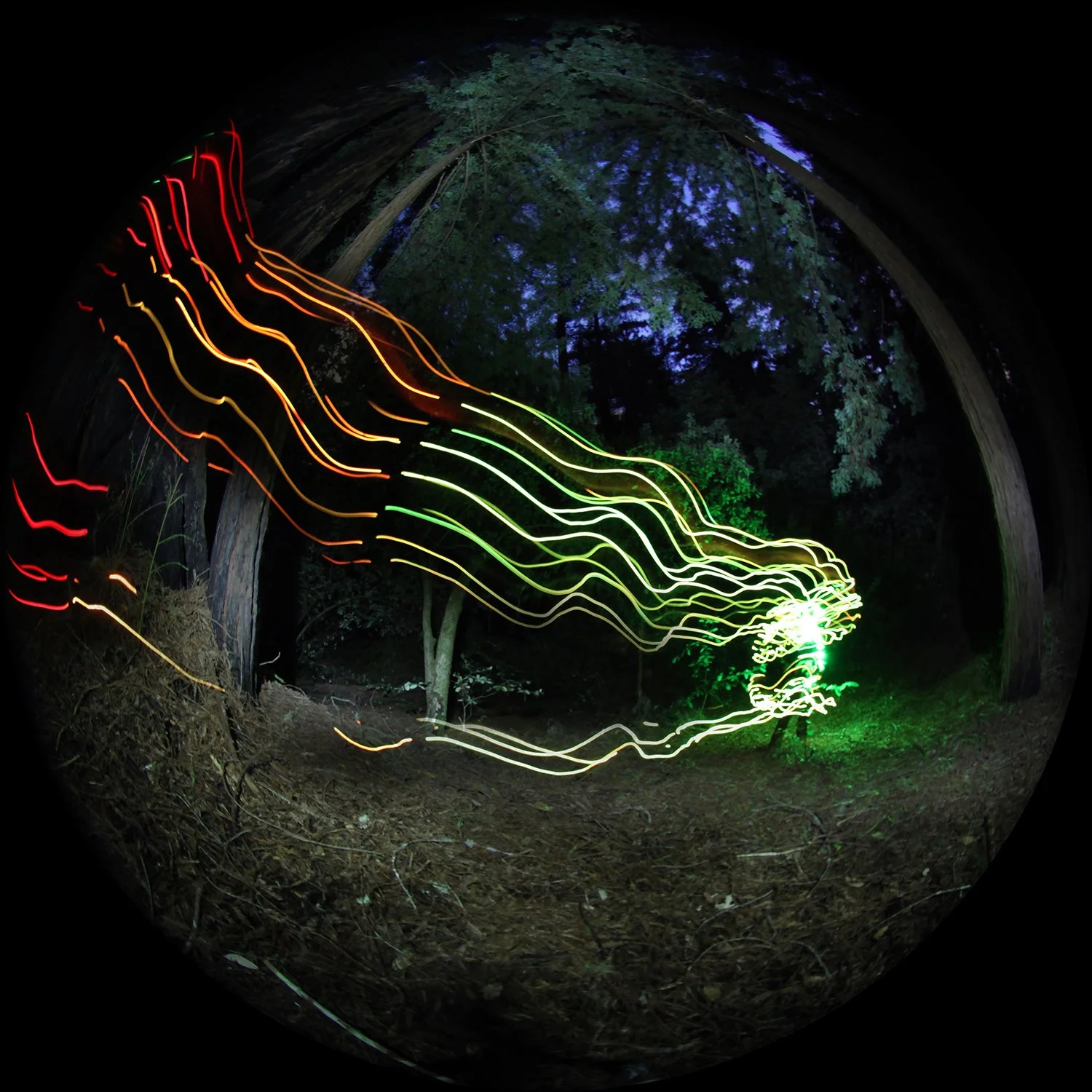
Animation stills from Presence Interference, 2018. 360° light-painted imagery responds to viewer presence within the installation, creating an evolving, abstract representation of the redwood forest ecosystem.
The Luminaire Bloom
The Luminaire Bloom is an interactive light installation that explores the relationship between human presence, environmental change, and collective action. Inspired by the contrast between the beauty of dark night skies and the growing effects of light pollution, the sculptural flower incorporates time-lapse imagery of nighttime light pollution over Santa Cruz, California.
As viewers gather around the sculpture, their collective presence activates changes in the illuminated petals, transforming the projected imagery and revealing new visual relationships within the bloom. The work uses interaction and light to visualize how individual actions can accumulate into larger environmental impacts and how collective participation can create the potential for meaningful change.
The reflection of each participant within the illuminated bloom becomes part of the work, connecting the viewer directly to the environment being represented. Through this interaction, The Luminaire Bloom encourages viewers to consider their own presence within ecological systems and the possibility of working collectively to reveal alternative ways of experiencing and responding to environmental change.
The Luminaire Bloom was exhibited at GLOW Festival, Museum of Art and History (MAH), Santa Cruz, CA, in October 2018.


Multimedia installation with metal, cheesecloth, projection, animation, audio, Kinect, and software written with MAX/MSP.
The Harrison Studio & The Center for the Study of the Force Majeure
My creative research practice was profoundly shaped by my work with environmental artists Newton and Helen Harrison, widely recognized as pioneers of the ecological art movement that emerged in the 1970s. From 2017–2022, I worked as a Studio and Research Assistant with Newton Harrison and The Harrison Studio / Center for the Study of the Force Majeure.
Working alongside Newton Harrison provided an opportunity to observe and contribute to an interdisciplinary practice that brought together art, ecology, geography, systems thinking, and environmental policy. The Harrisons approached ecological problems through large-scale, conceptual projects designed not only to represent environmental change, but to propose strategies for adapting to it and working collaboratively with natural systems.
My role included research, visual documentation, image-making, and contributions to several major projects. Selected projects include:
On the Deep Wealth of this Nation: Scotland
An interdisciplinary project exploring Scotland’s ecological, cultural, and economic resources and alternative approaches to long-term environmental sustainability. Developed through a collaboration between The Harrison Studio, Center for the Study of the Force Majeure, and The Barn in Scotland, the project used research, photography, large-scale prints, and collage to explore relationships between landscape, resources, and ecological systems.
My contributions included visual research, photography, large-scale prints, and collaged works that supported the project’s environmental research and storytelling.
The work was exhibited in Edinburgh, Aberdeen, and Glasgow, Scotland, and at the Taipei Biennial between 2018 and 2022.
Project Overview & Video Link: On the Deep Wealth of this Nation: Scotland
Apologia Mediterraneo
For this project, I participated in the preliminary research by investigating ecological and geopolitical relationships throughout the Mediterranean region, using the Harrison Studio's practice of large-scale environmental research and speculative future planning.
Presented as part of the collateral events of the 58th Venice Biennale, 2019.
Project Overview & Video Link: Apologia Mediterraneo
A Future Garden for the Sagehen Watershed in the High Sierra:
As part of the Harrison Studio's Future Gardens project at the Sagehen Creek Field Station in the High Sierra, I documented five selected sites at different elevations throughout the watershed using 360° panoramic photography.
The Future Garden concept proposes assisting the migration of plant species into areas where they may be better able to withstand the effects of climate change. The 360° imagery provides a spatial record of these sites and creates an immersive way to experience the watershed and its changing ecological conditions. I produced equirectangular panoramic images by combining multiple photographs captured with a DSLR camera, an 8mm super-wide-angle lens, and a specialized 90° panoramic tripod mount. Multiple exposures were composited to create high-dynamic-range (HDR) images covering a complete 360° field of view.
These panoramic photographs function both as documentation and as immersive research tools, providing a visual record of specific locations within the watershed while allowing viewers to explore the landscape from a remote or virtual perspective.
User Notice for Viewing 360° Panoramas:
To explore the interactive panoramas, hover over the image and click or drag to look around the environment. Depending on your device, scrolling may zoom rather than navigate the panorama. If navigation becomes difficult, move your cursor toward the black area at the side of the viewer and continue scrolling the page.
Equirectangular composite of Sagehen Site #2 in the Aspen Grove.
Equirectangular composite of Sagehen Site #4 with Ponderonsa Pines.
Equirectangular composite of Sagehen Site #5 with Independence Lake.
Eco-Orbuculum
The Eco-Orbuculum was initially created during a two-year fellowship in collaboration with The Harrison Studio, the Center for the Study of the Force Majeure, and the UCSC IDEA Hub.
This project investigates how immersive technologies can provide new ways of visualizing ecological change and experiencing environmental data. The orb has evolved through three iterative prototypes, each refining the process for projecting 360° imagery from the Sagehen Watershed’s Future Gardens project into a glass sphere. Each prototype builds on the previous version, testing and refining the projection, enclosure, and electronic components. The current prototypes establish the foundation for an interactive system, with touch sensors planned as the next stage of development. The project explores alternative ways of experiencing virtual environments without relying on traditional 2-dimensional screens or head-mounted displays.
The sphere functions as both a technological interface and a metaphorical object. The term orbuculum, historically associated with a crystal ball, refers to a tool for seeing or divining the past, present, and future. Eco-Orbuculum reinterprets this concept through an ecological lens, using 360° time-lapse imagery to visualize changes within a living ecosystem over time.
By bringing environmental imagery into a physical, interactive object, the project creates an ecocentric viewing experience in which the viewer can contemplate ecological systems, technological mediation, and the long-term effects of environmental change.
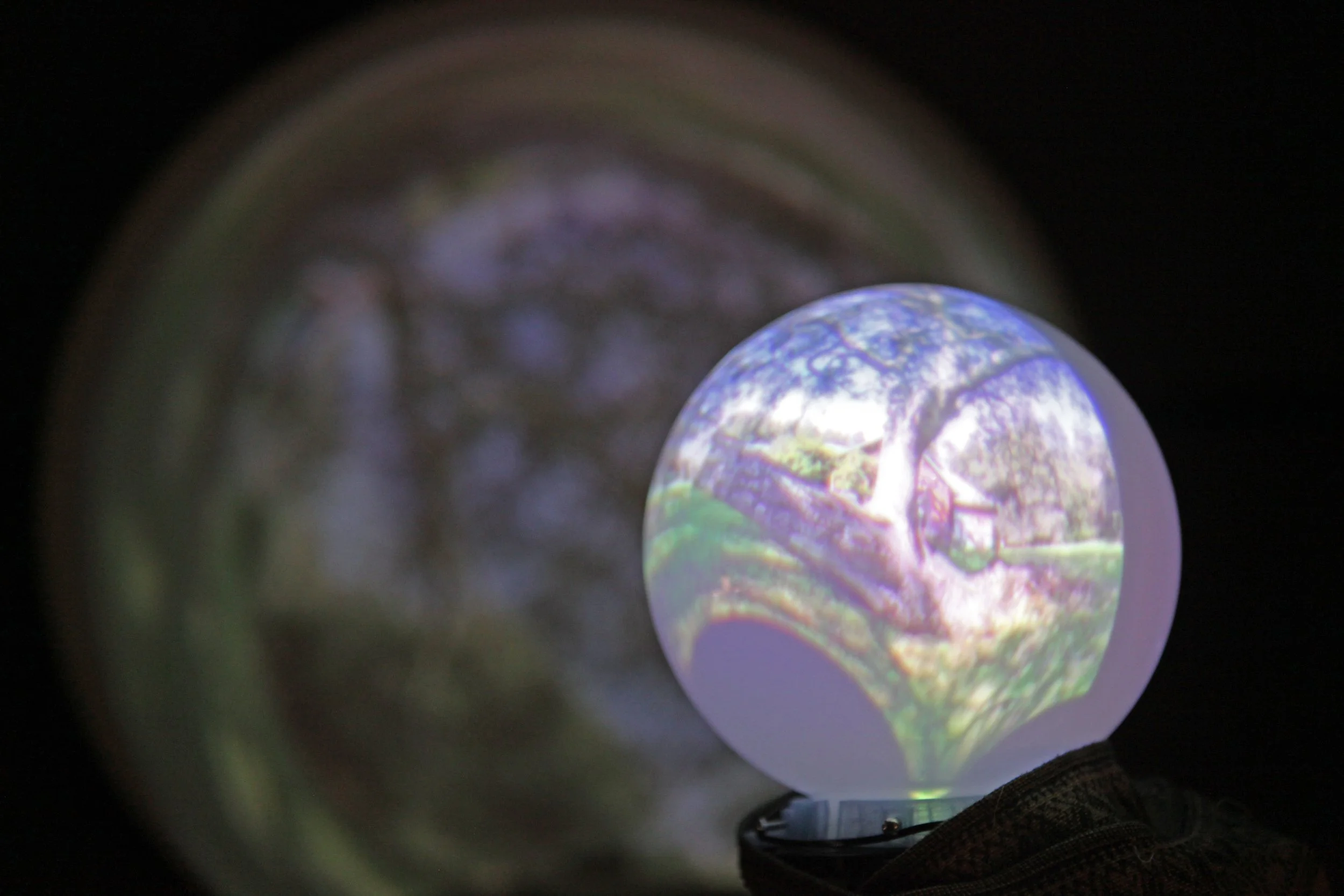
Eco-Orbuculum: Prototype #1 is an initial multimedia demonstration with a mini-projector, glass globe, and 3D printed bracket. A parabolic dish (seen in the background) displays a full 360° view of the environment while the projection map becomes aligned.

Eco-Orbuculum: Prototype #2 is a self-contained iteration housed with components housed inside a laser cut wood box. Design of the animated imagery reflect improved alignment for adding touch sensors in the next phase of the design.
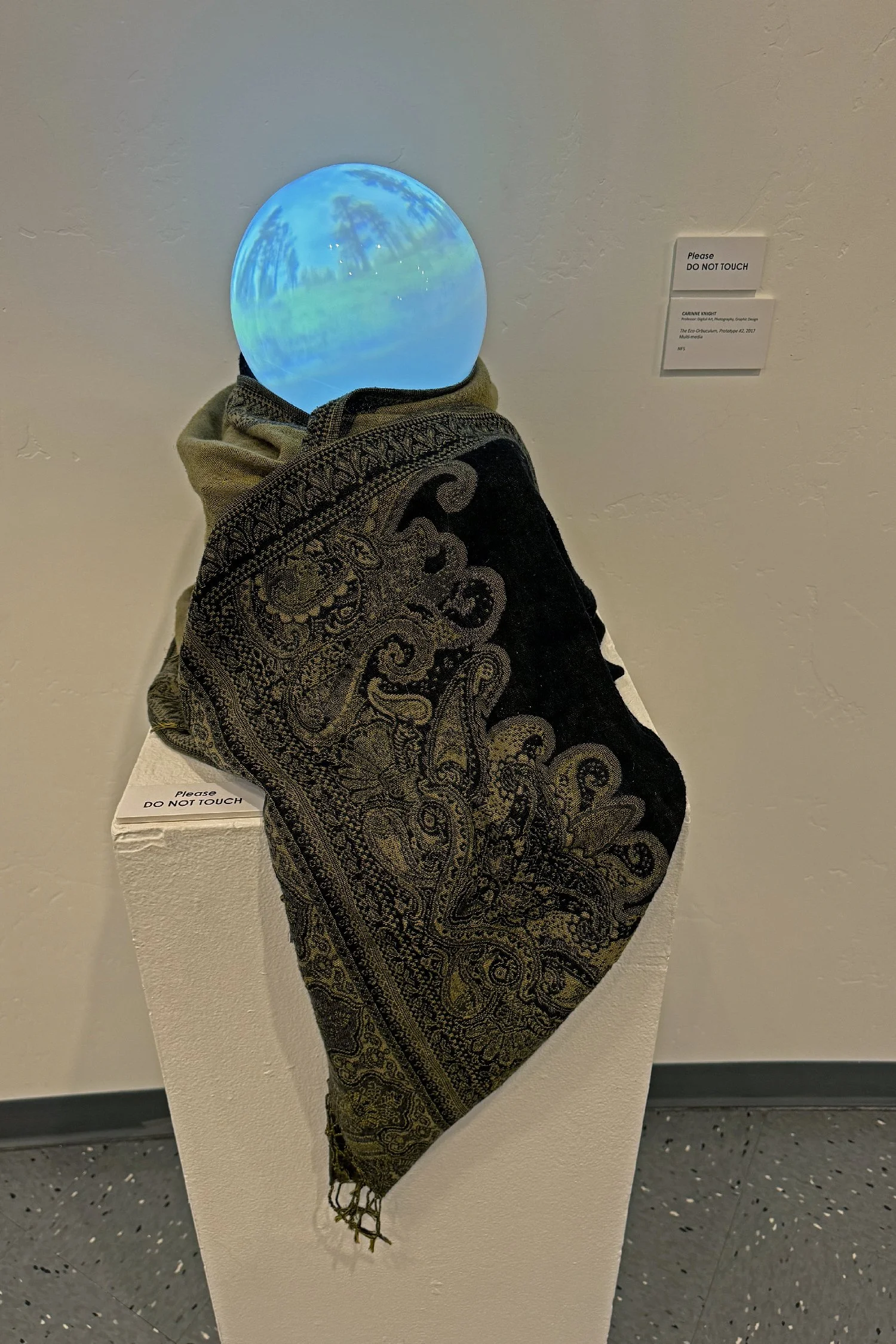
Eco-Orbuculum: Prototype #3 on display at the College of the Sequoias Art Gallery for a faculty show in Fall 2024 semester. This iteration included an improved lens, projector, and fabric for a sculptural element to improve conceptual comparison to a traditional scrying orb or crystal ball.
Monuments and Entropy: A Performative Investigation of Site
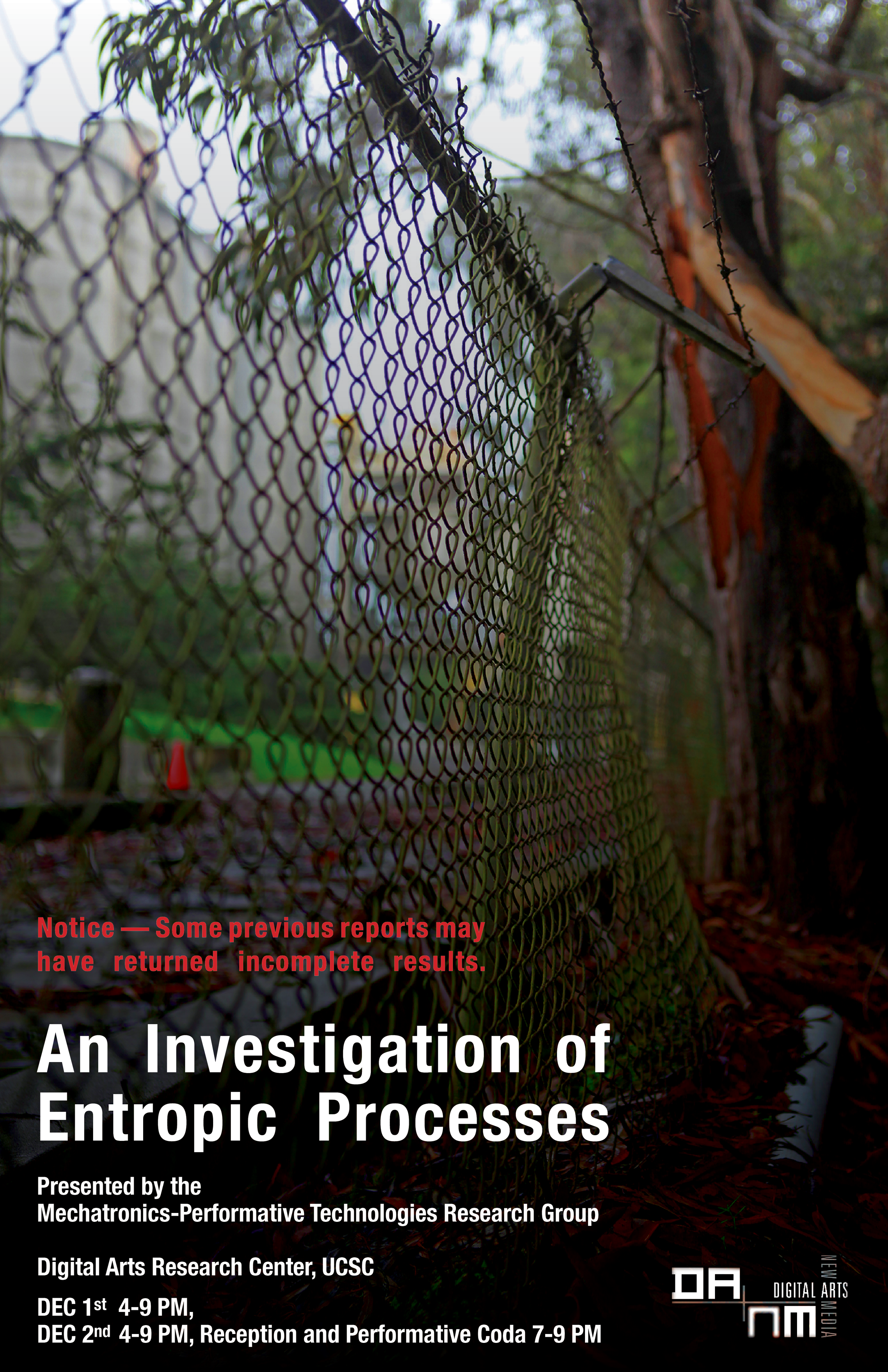
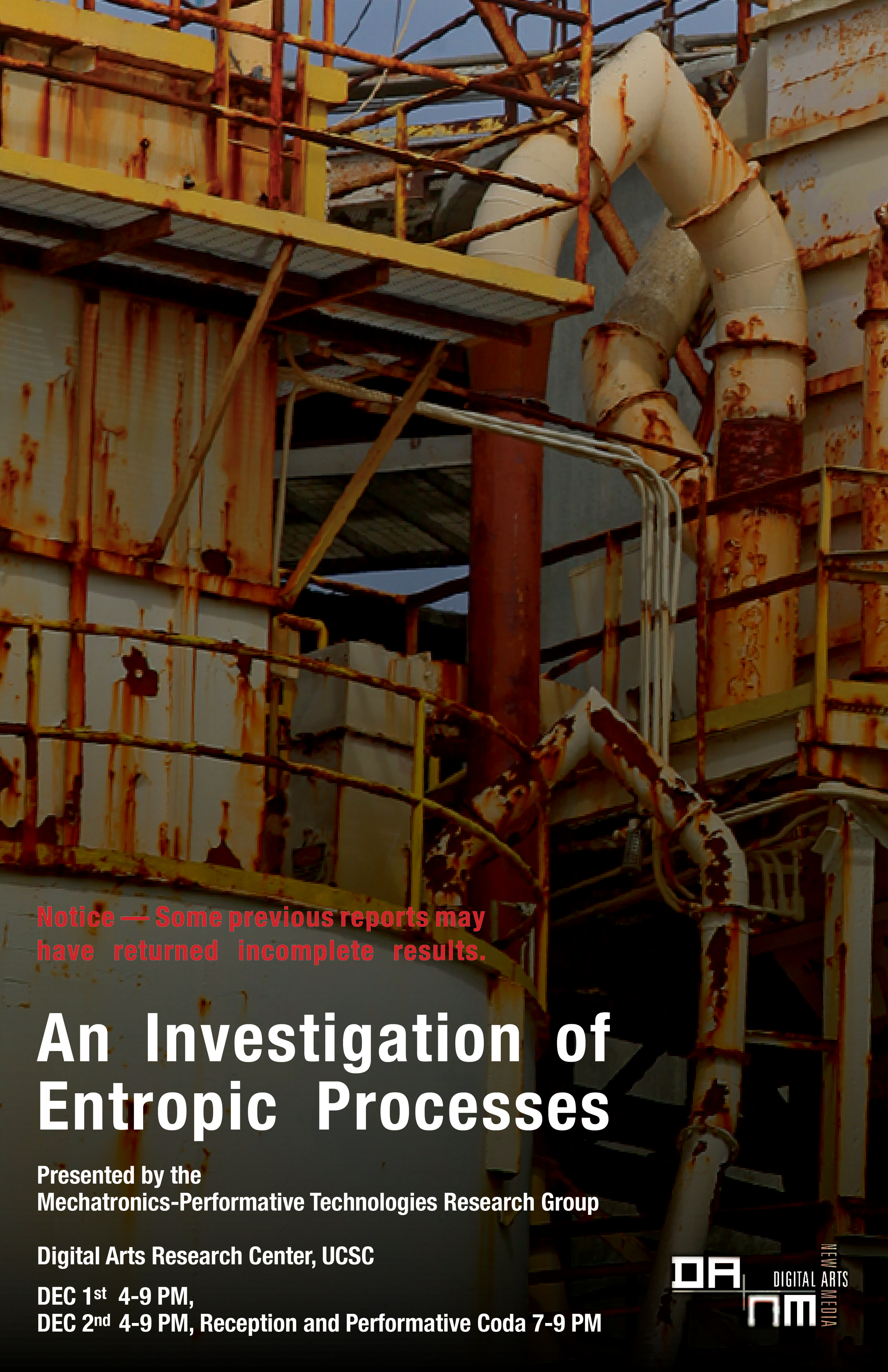
Monuments and Entropy was a collaborative, site-specific project organized by five members of the Digital Arts + New Media (DANM) MFA program at UC Santa Cruz. The project used performance, experimental documentation, and digital media to investigate the site of the now-defunct Davenport Cement Plant near Santa Cruz, CA as a landscape shaped by environmental change, history, and decay.
Inspired by the concept of monumental entropy, this interactive installation embodies various timelines, characters and perspectives; such as a limestone quarry, raw material, small lifeforms, and various tools and machinery. My contribution included a photographic essay and 360° projection study of the site onto a geodesic dome.
Exhibited at the Digital Arts Research Lab at the University of California, Santa Cruz in 2017.
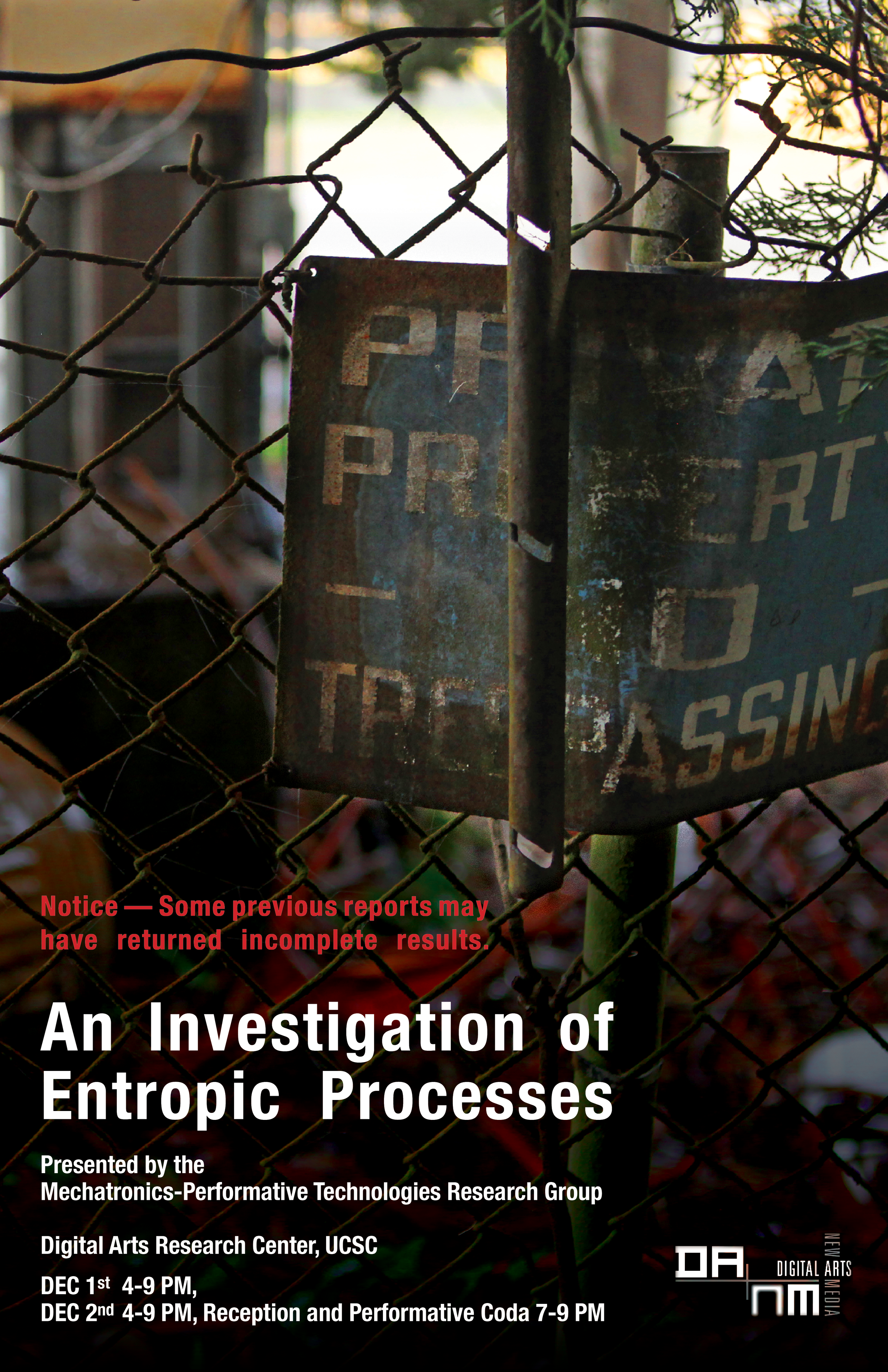
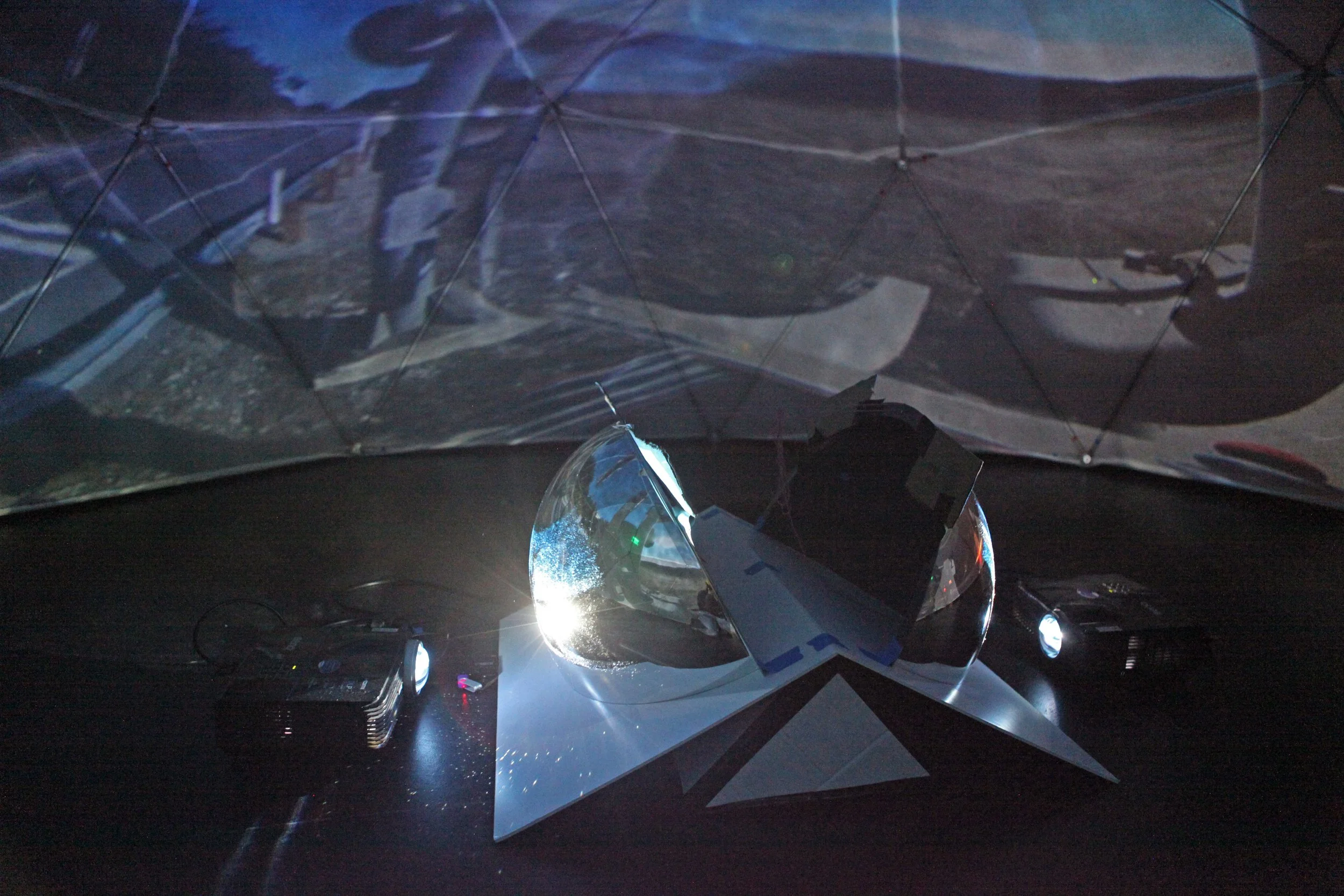
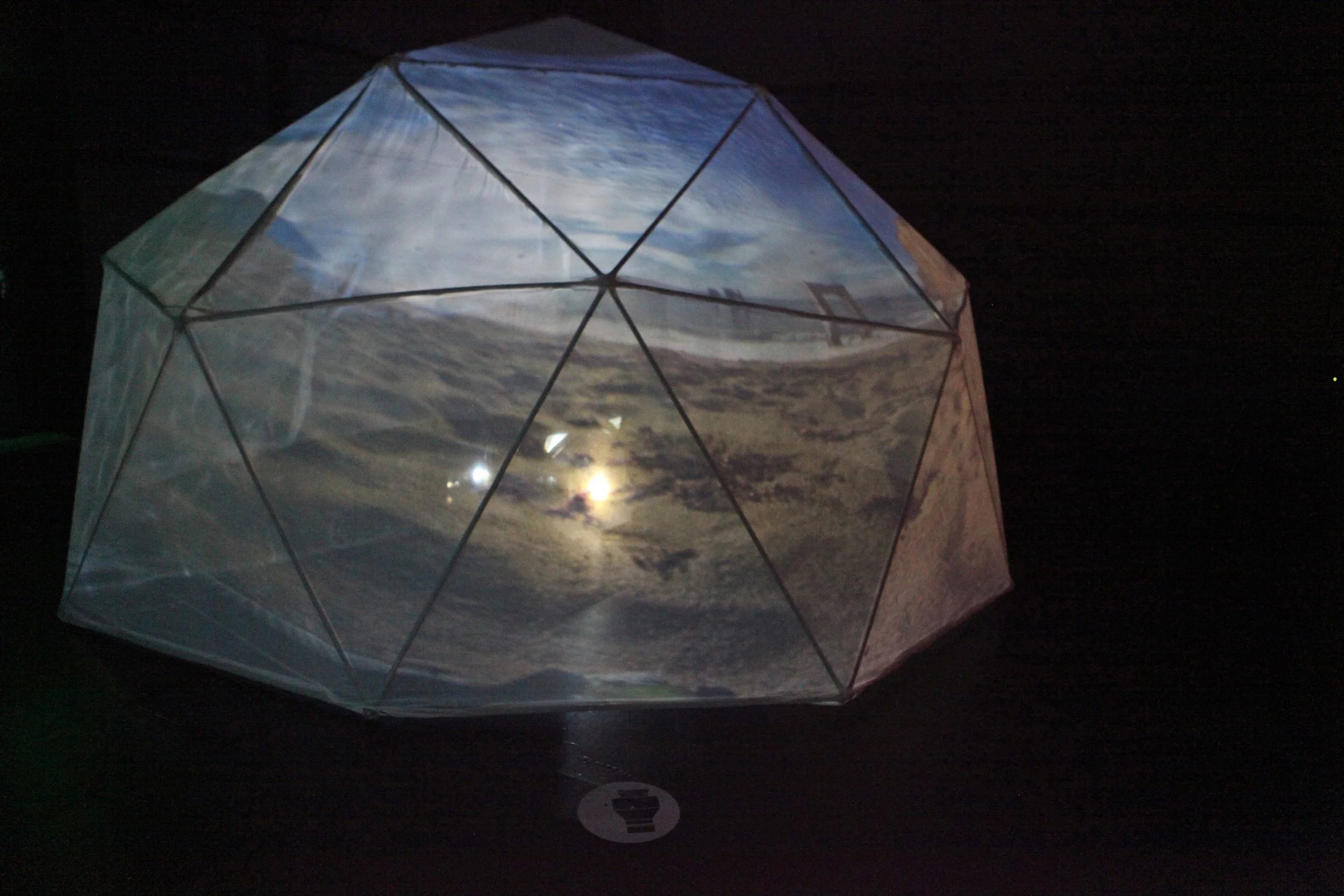
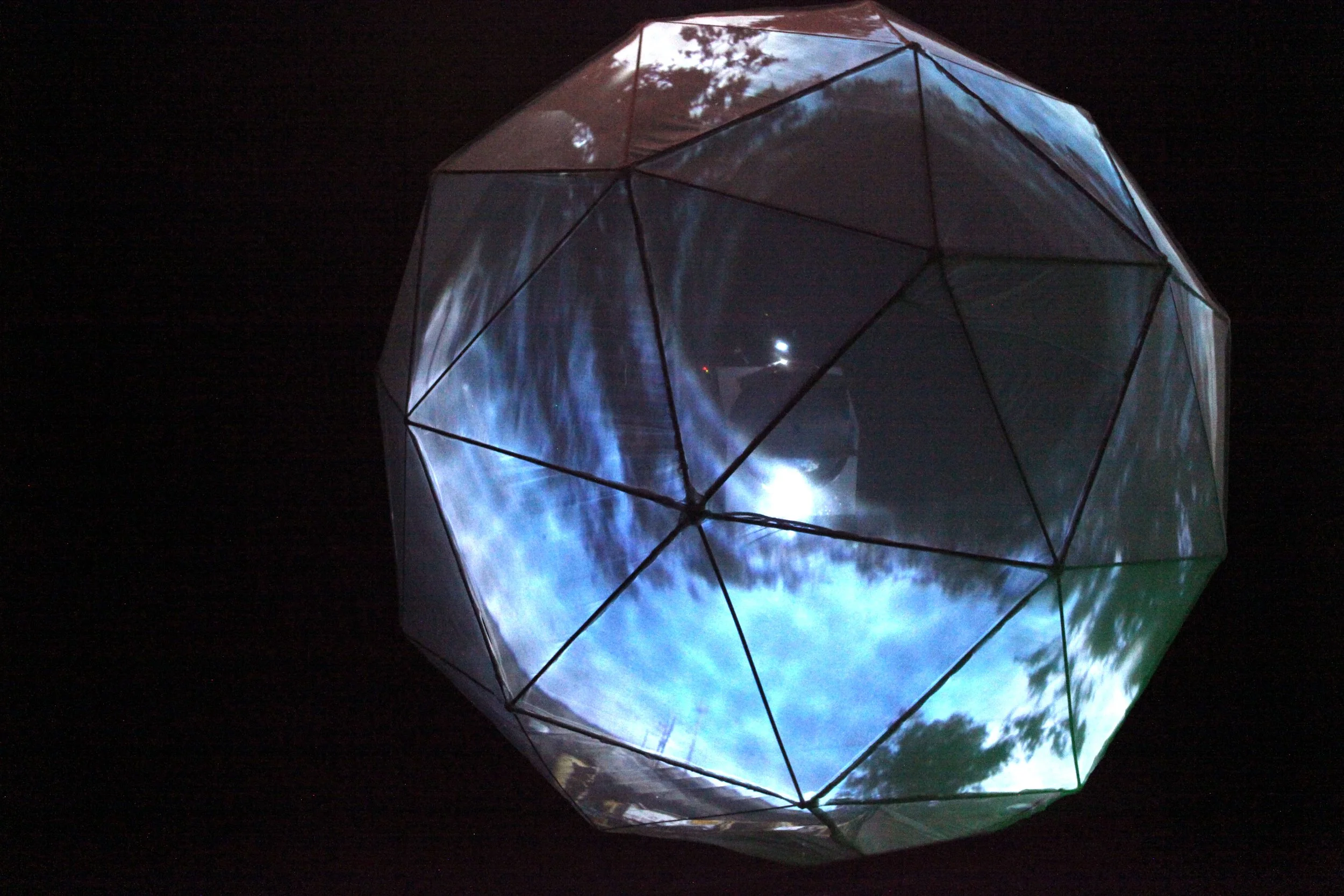
Above are perspectives of projections mapped onto a 360° geodesic dome, achieved by using dual projectors and spherical mirrors which create shifting perspectives of the site.
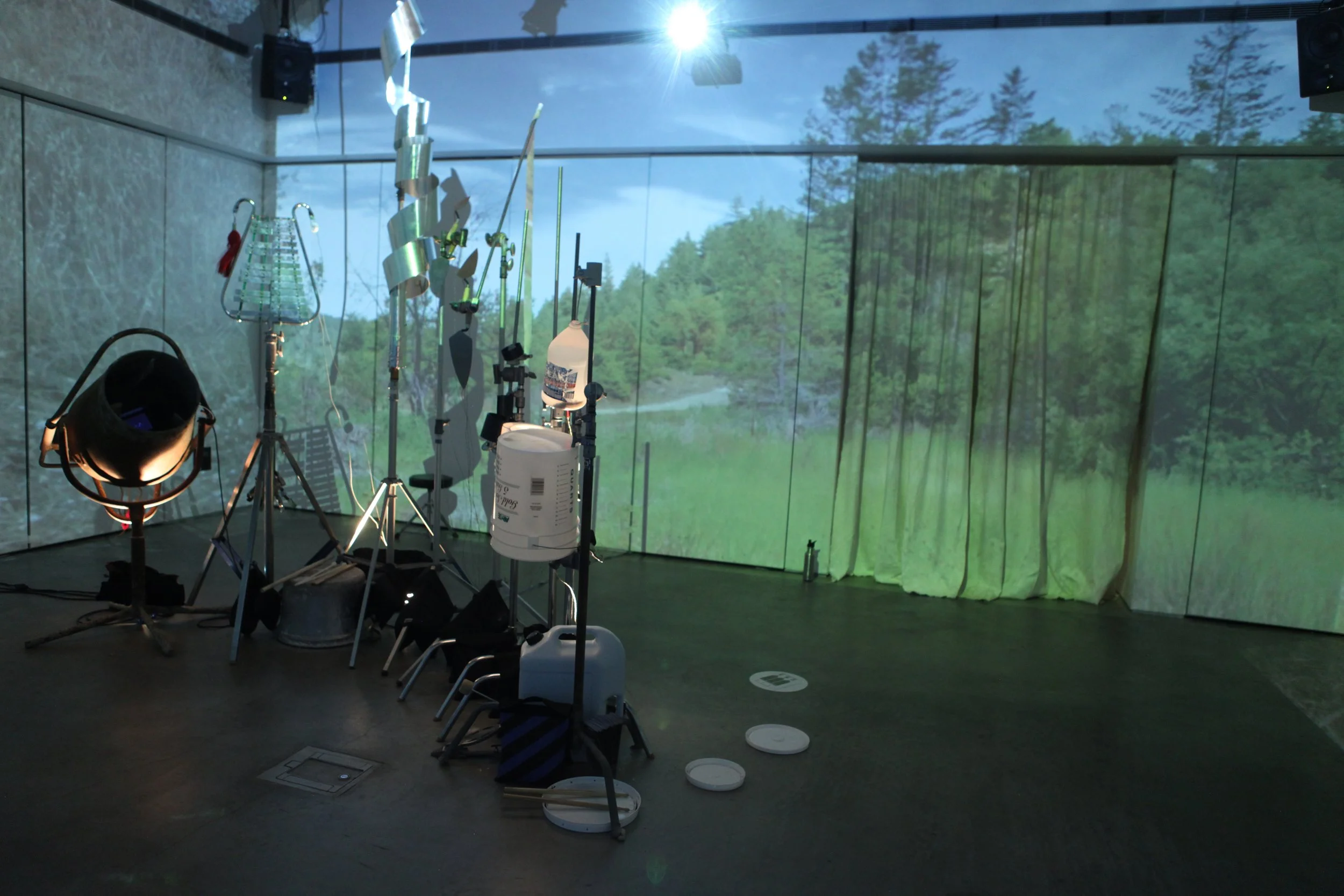
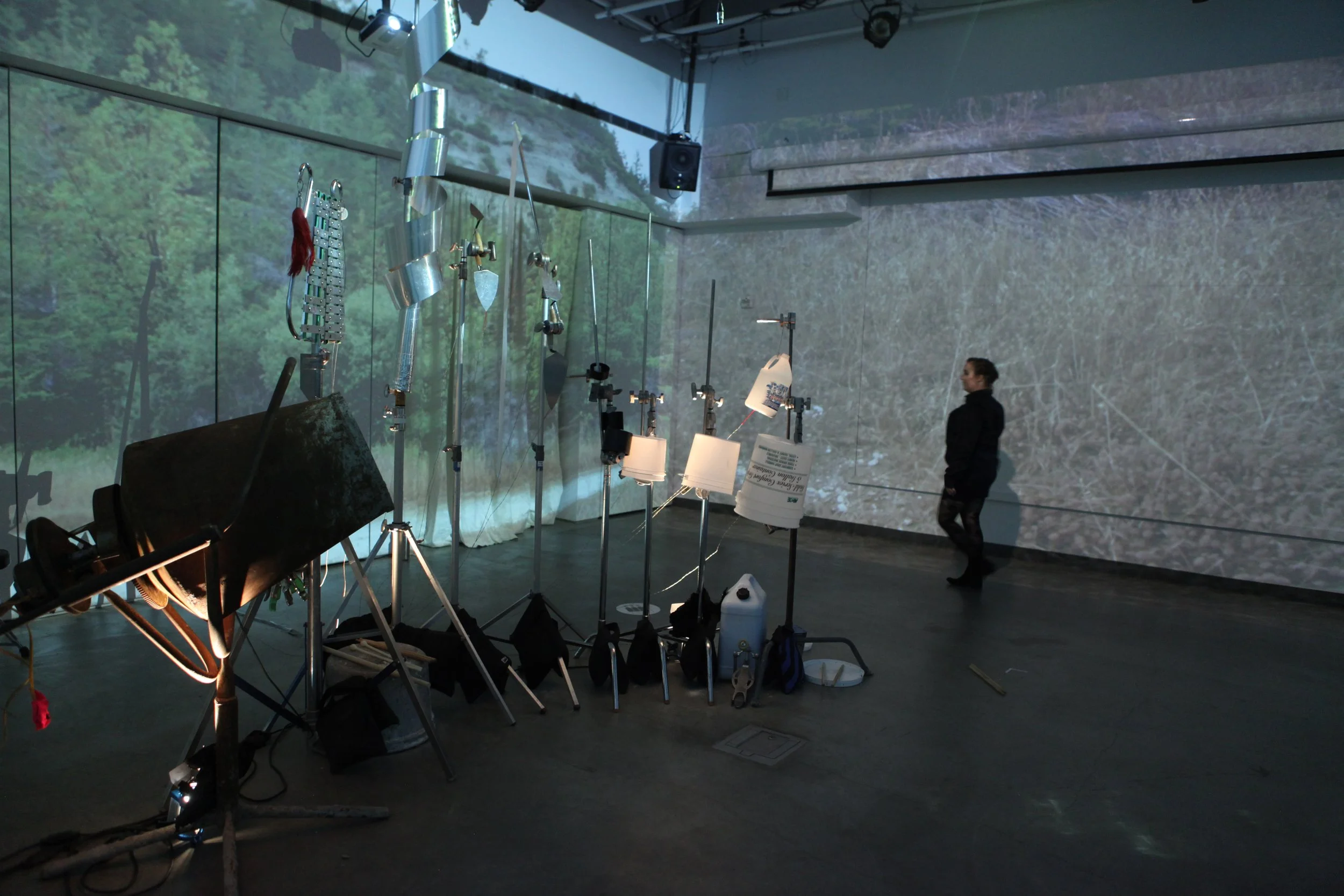
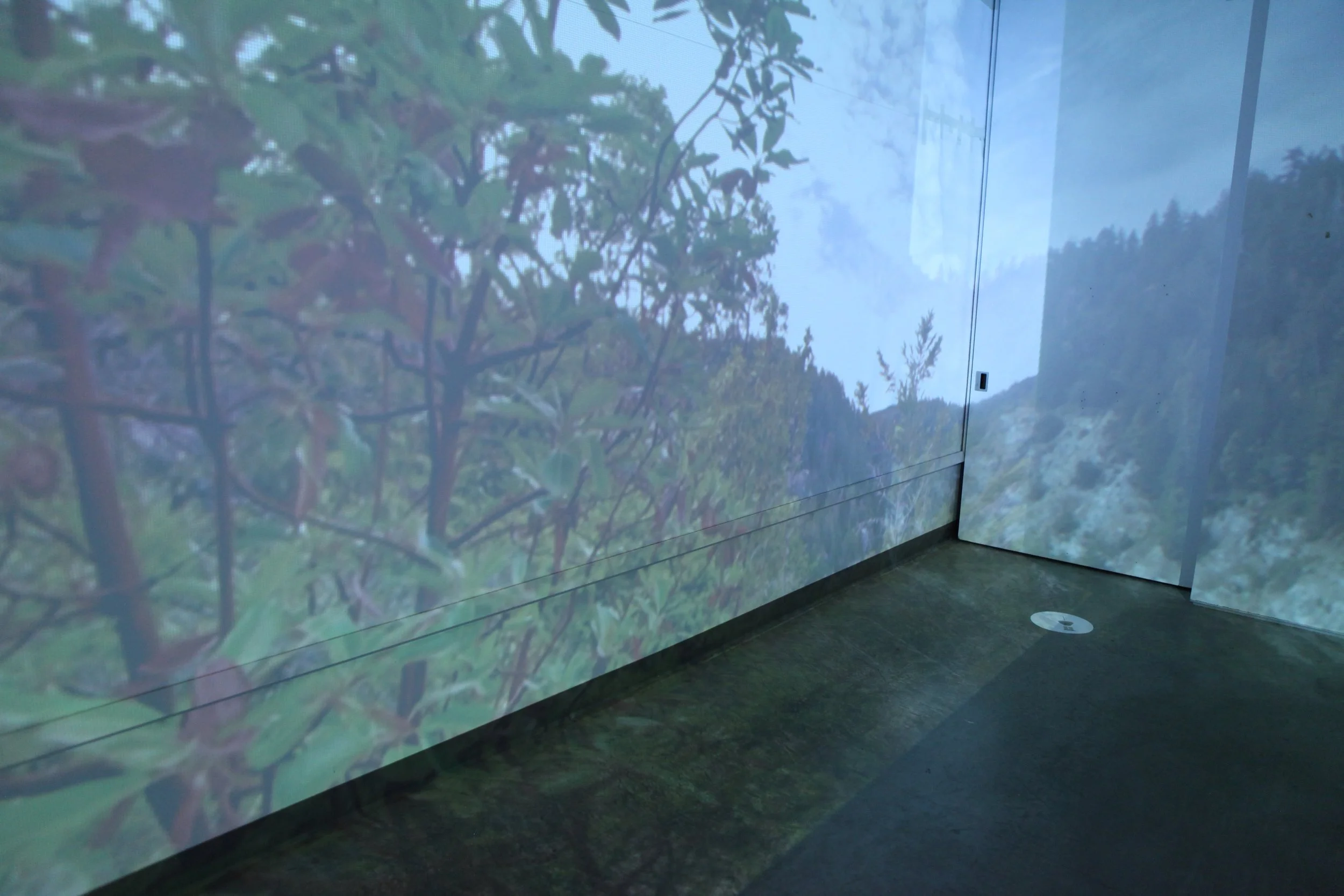
Projected imagery that filled the four walls of UCSC's Light Lab extending the photographic environment into the surrounding architecture; complementing the space surrounding a sculptural instrument created by co-collaborator.
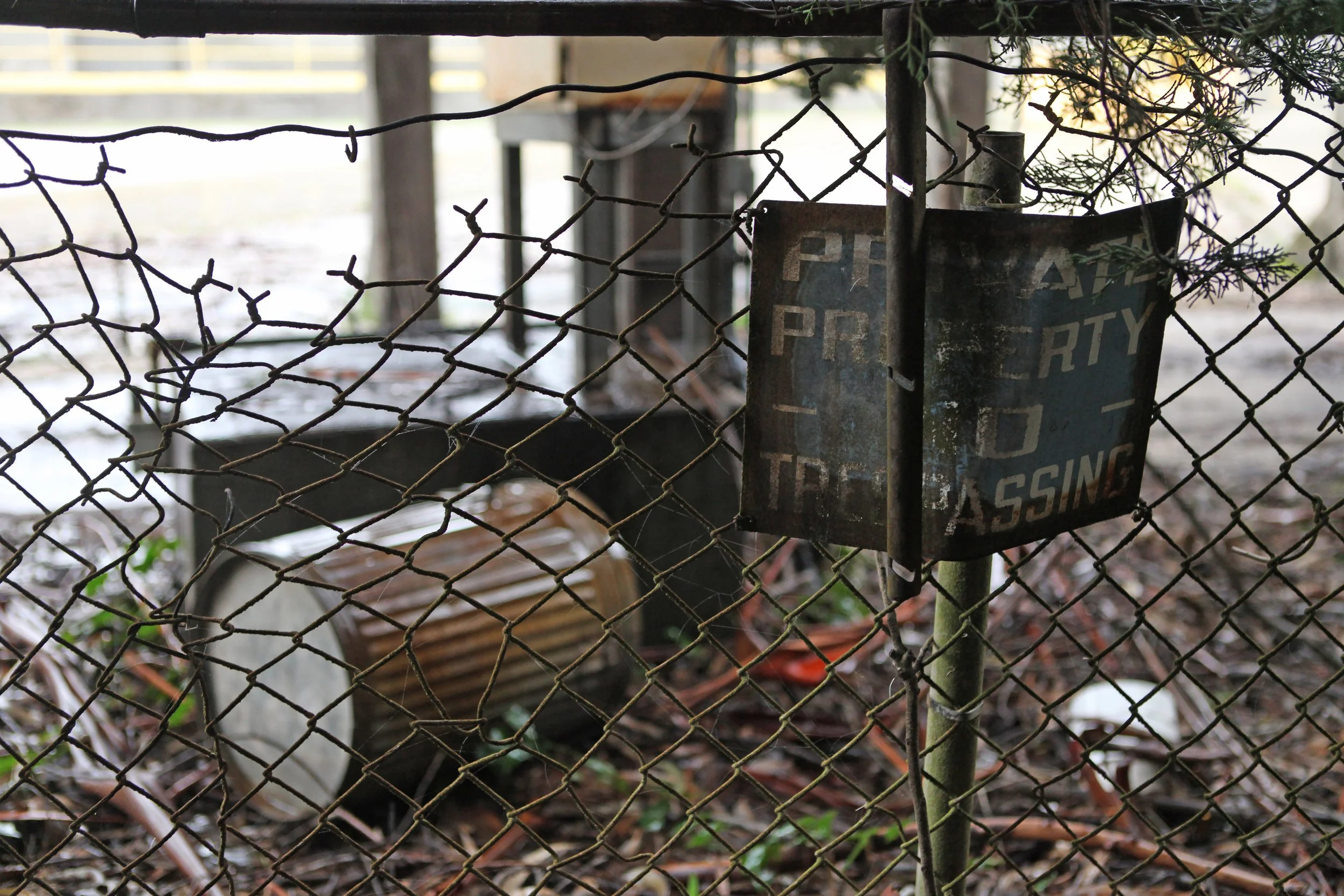
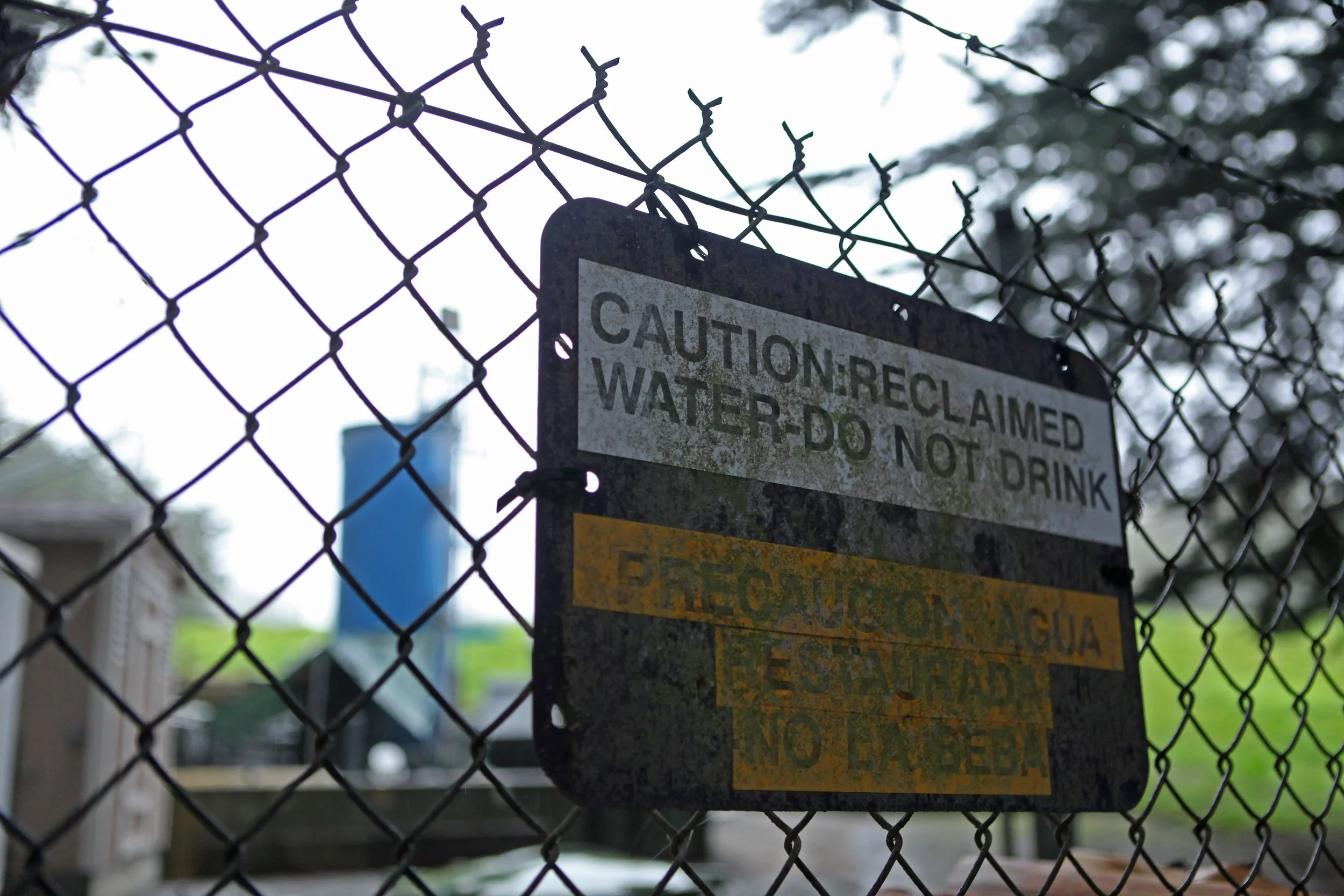
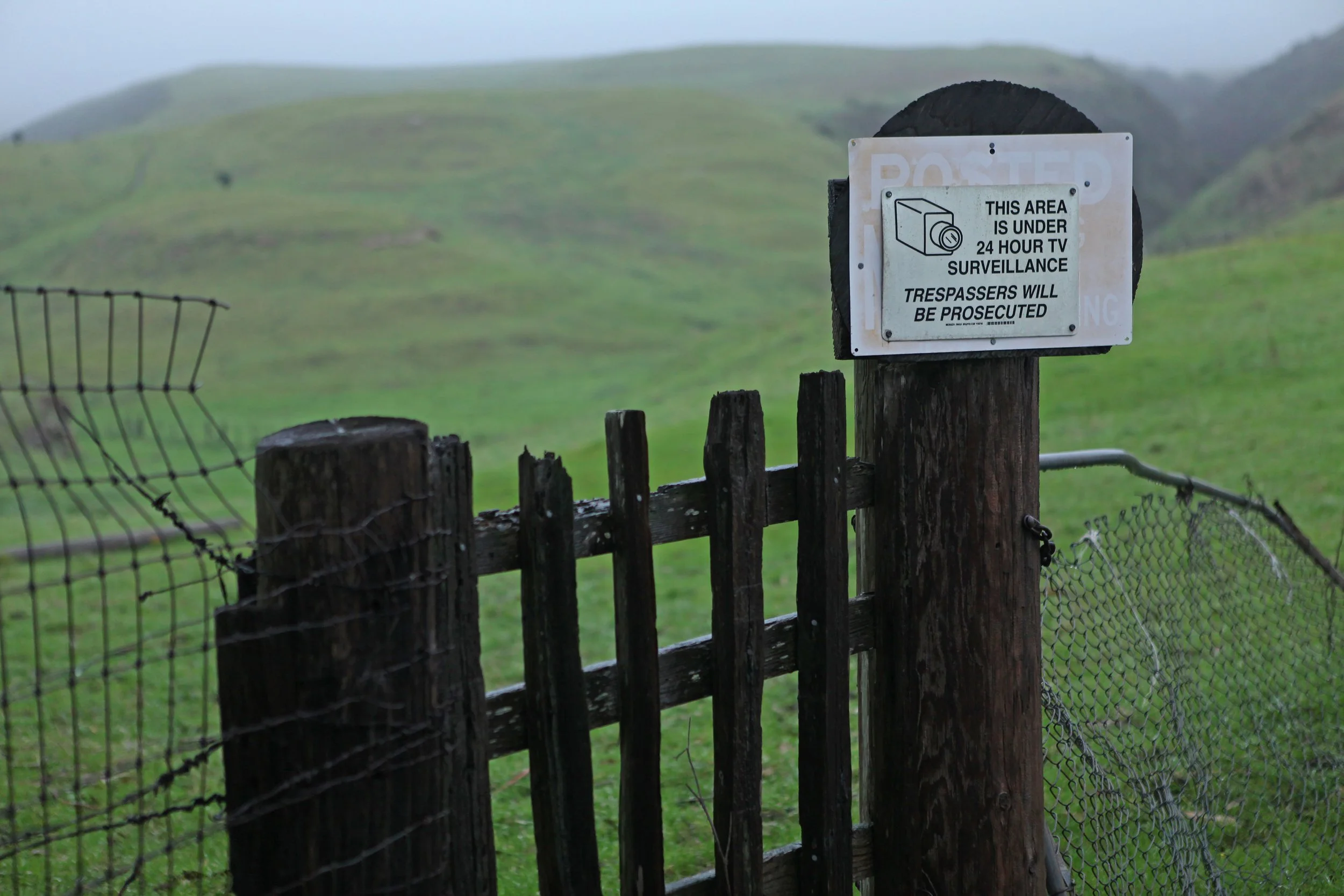
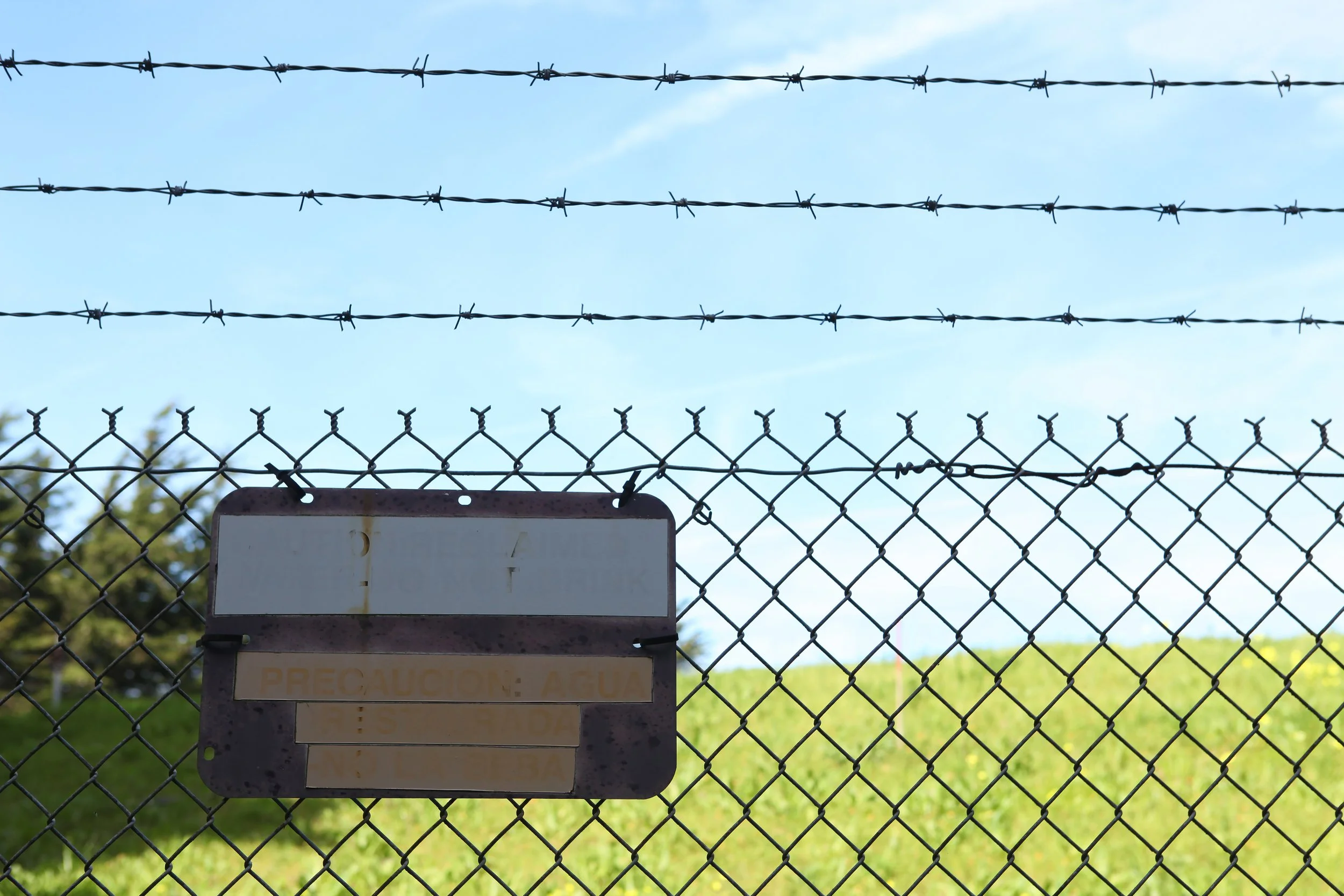
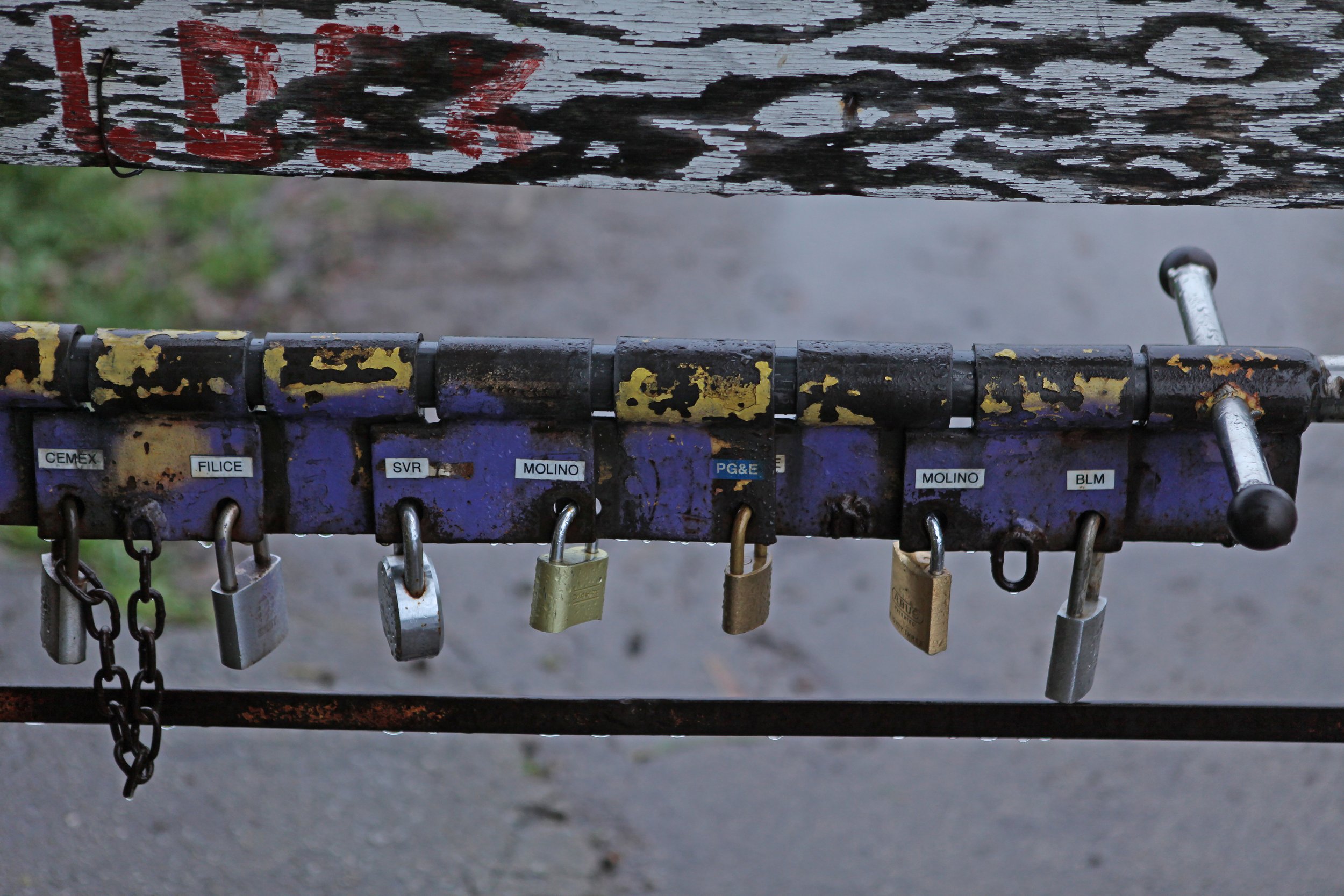
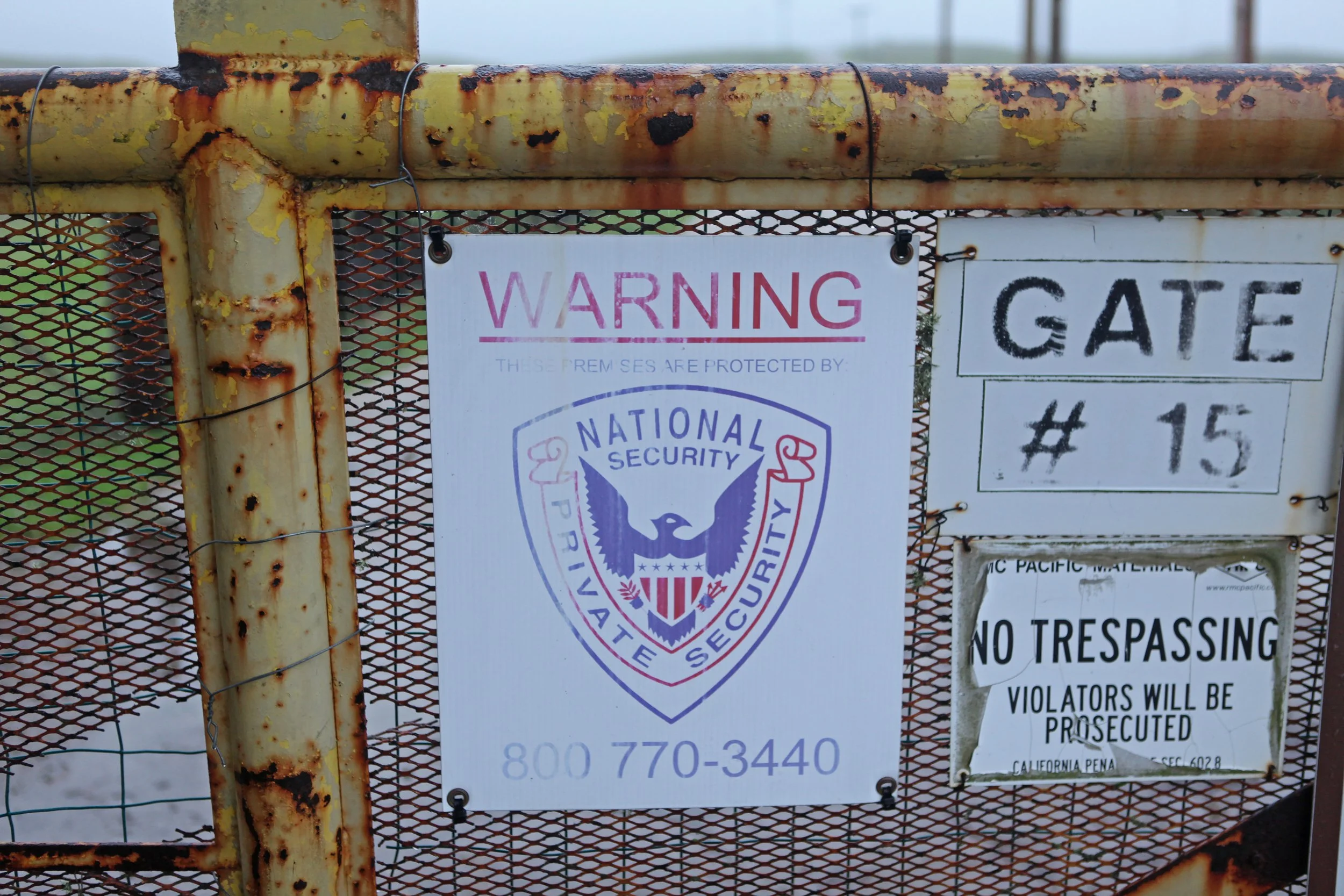
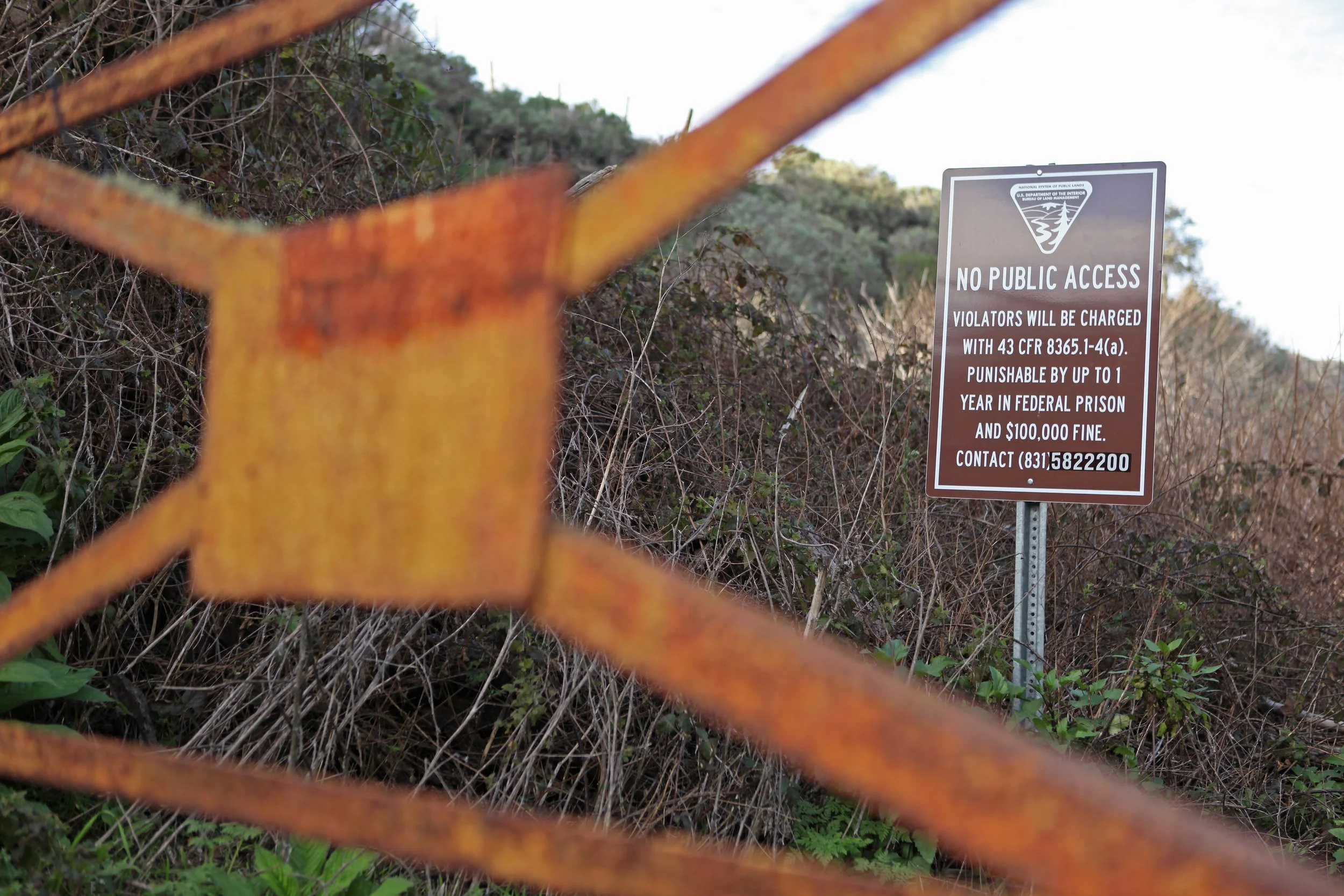
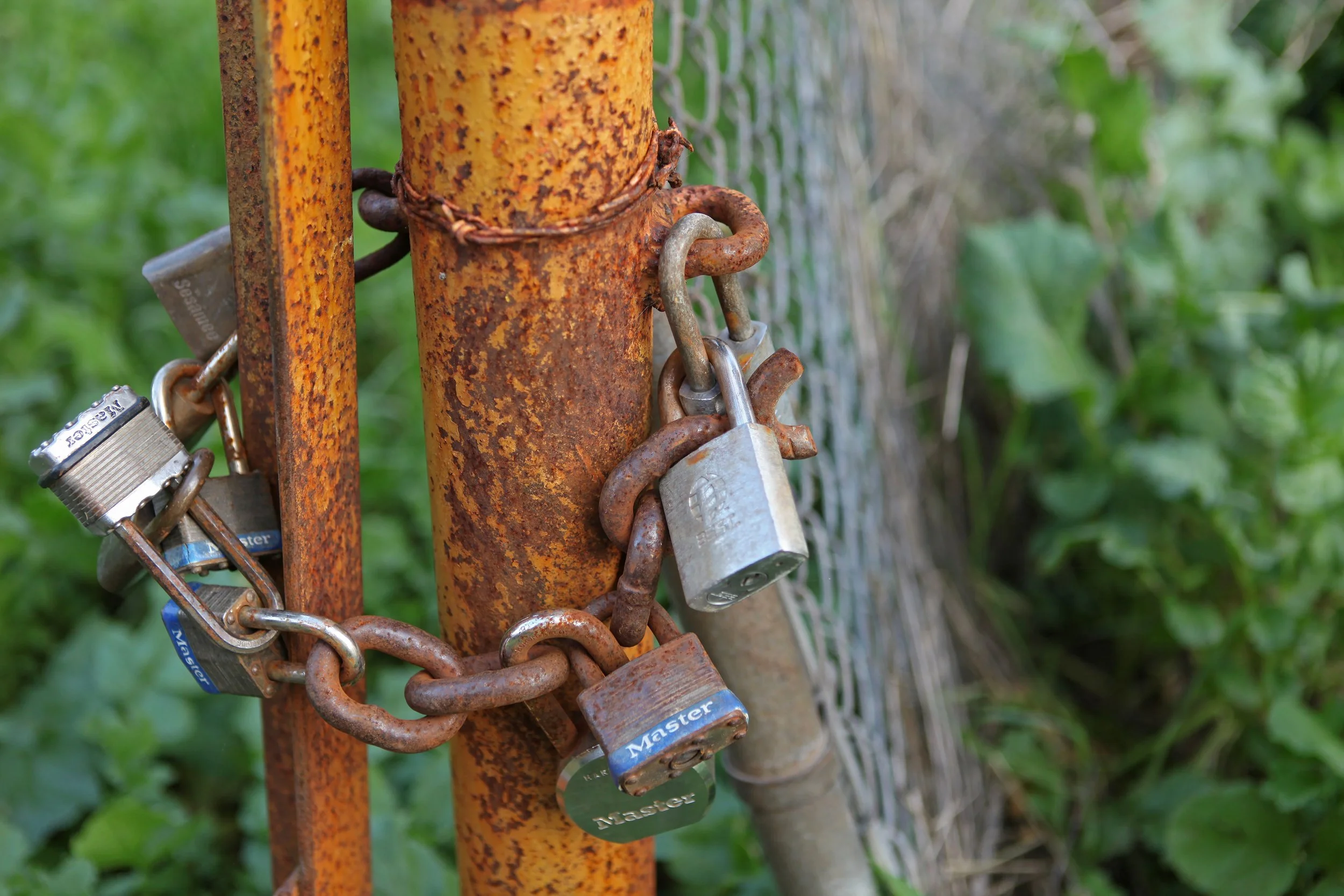
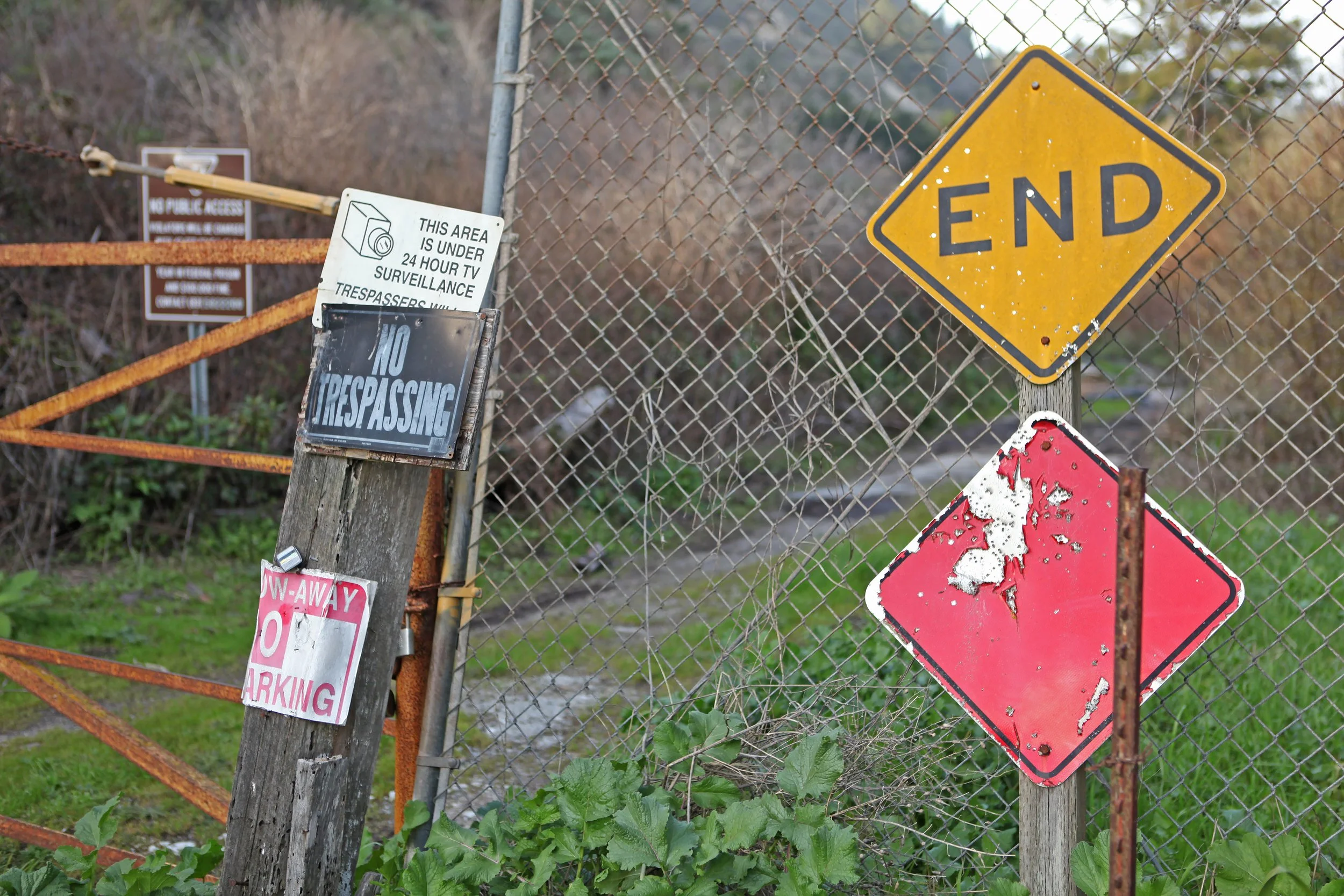
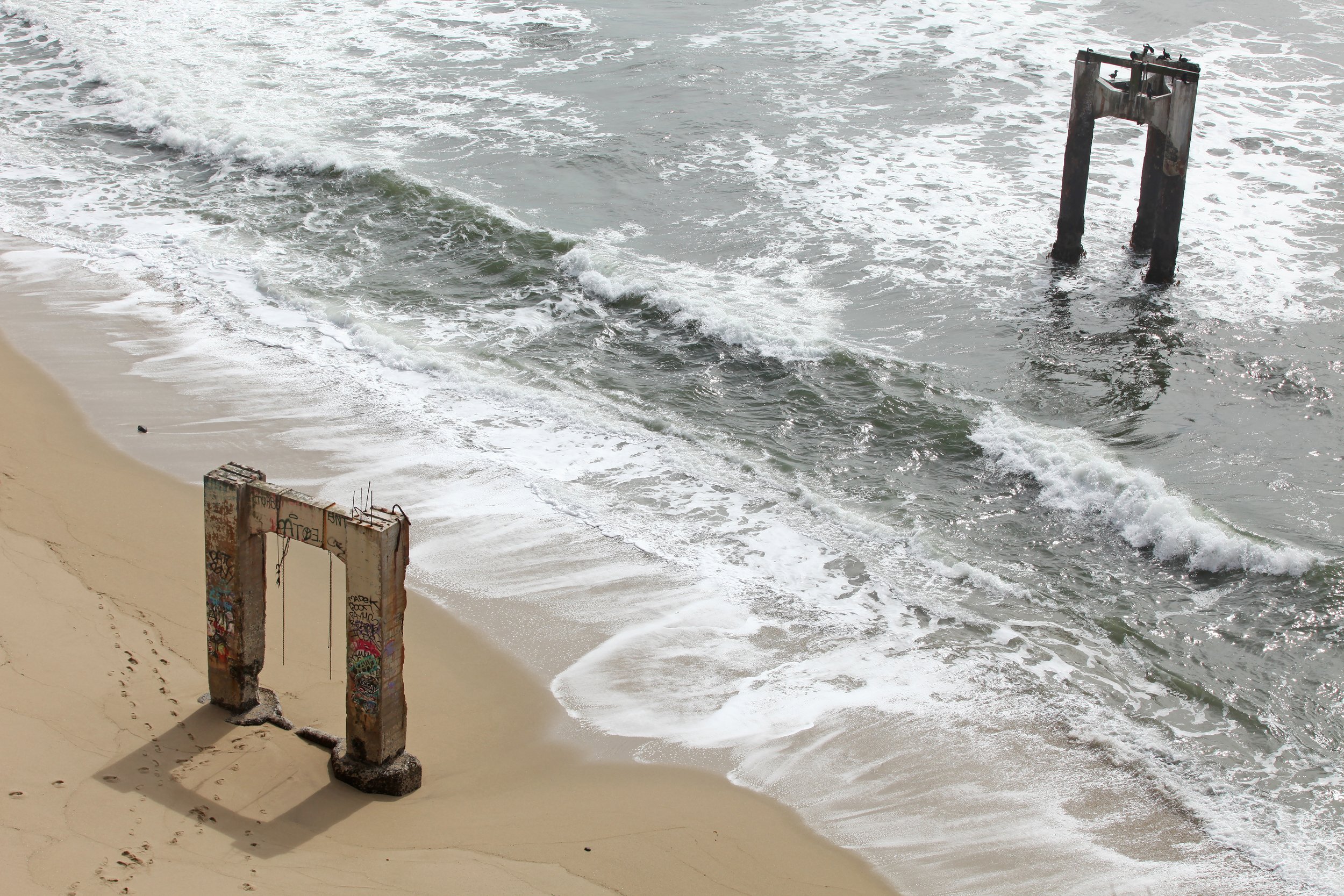
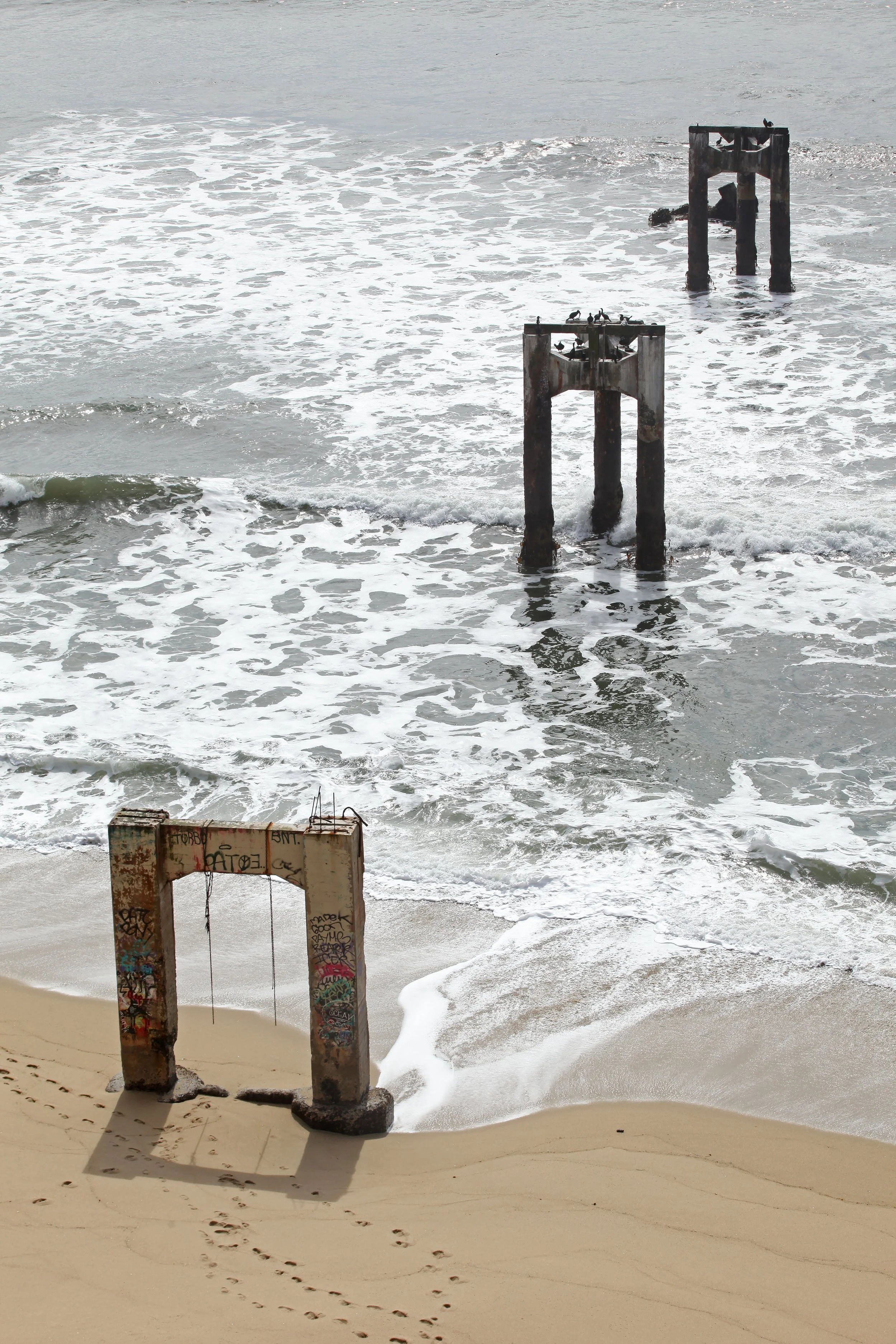
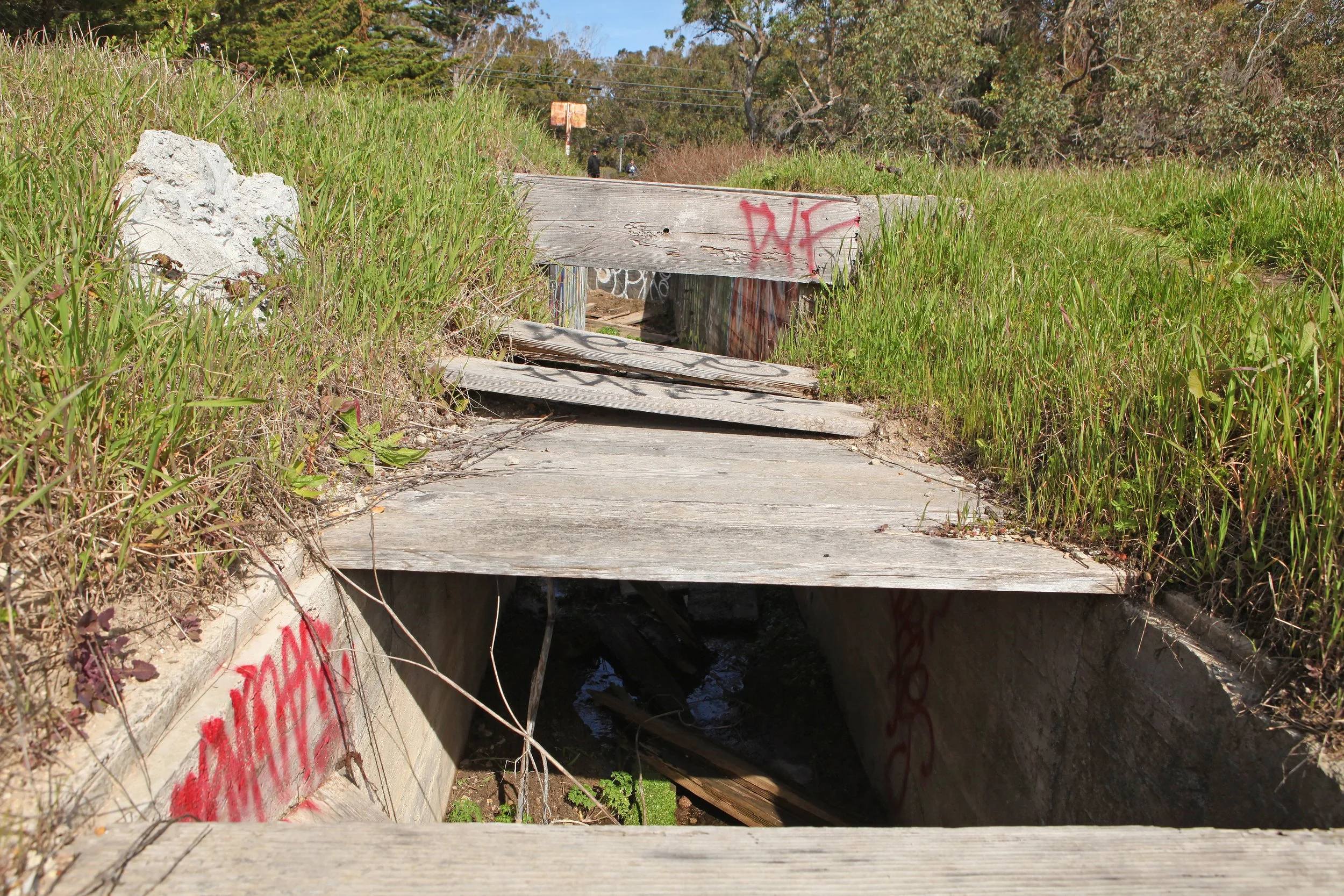
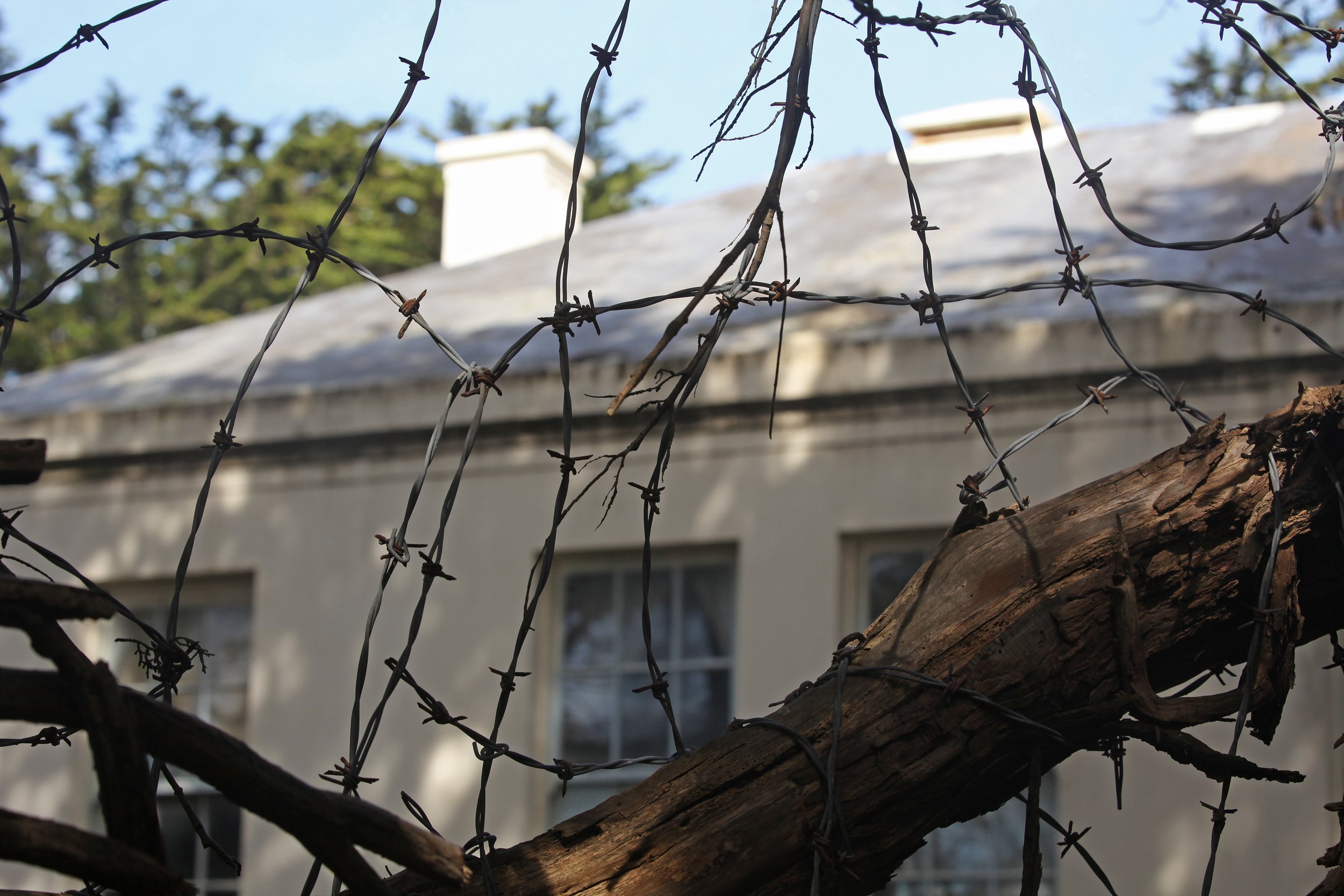
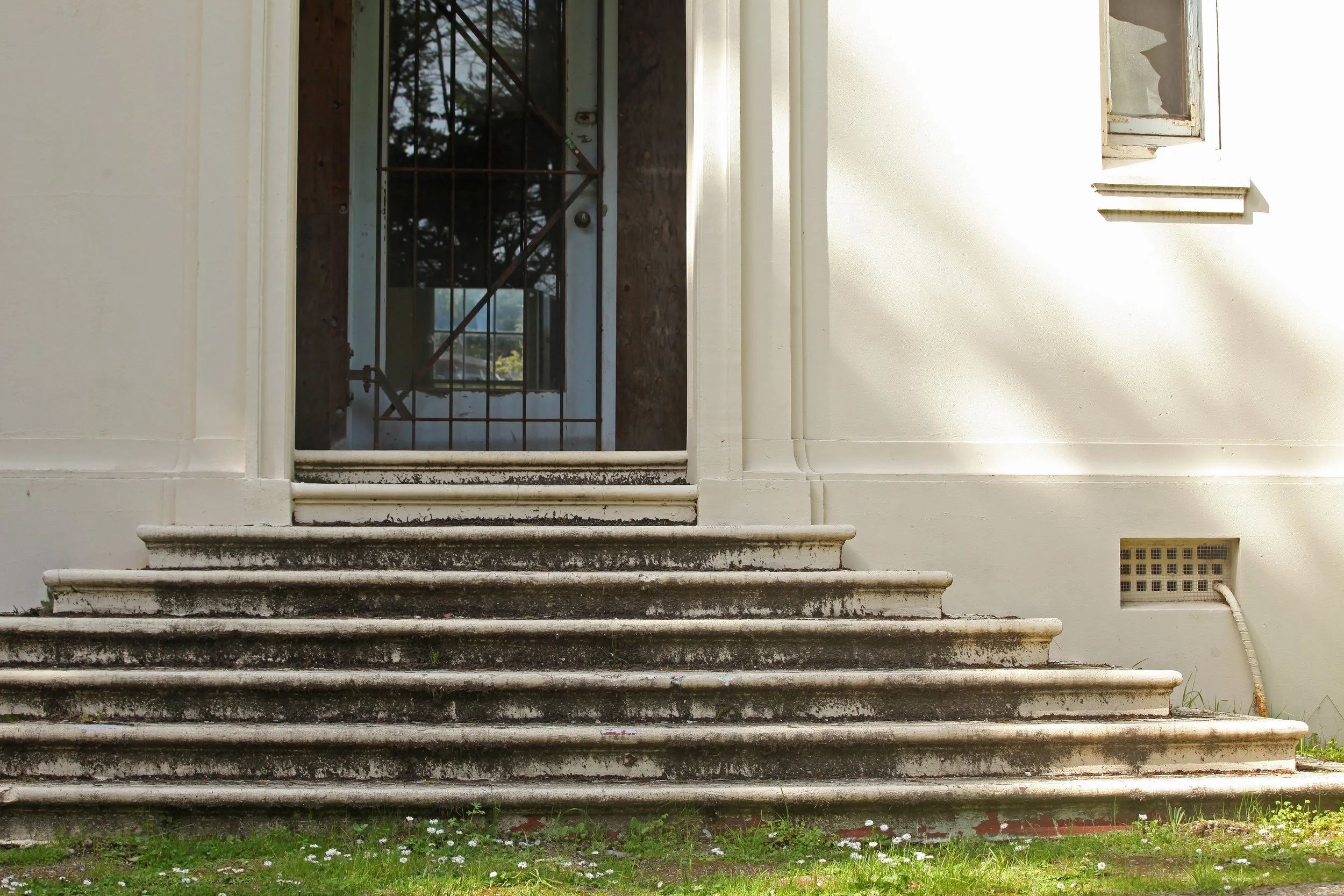
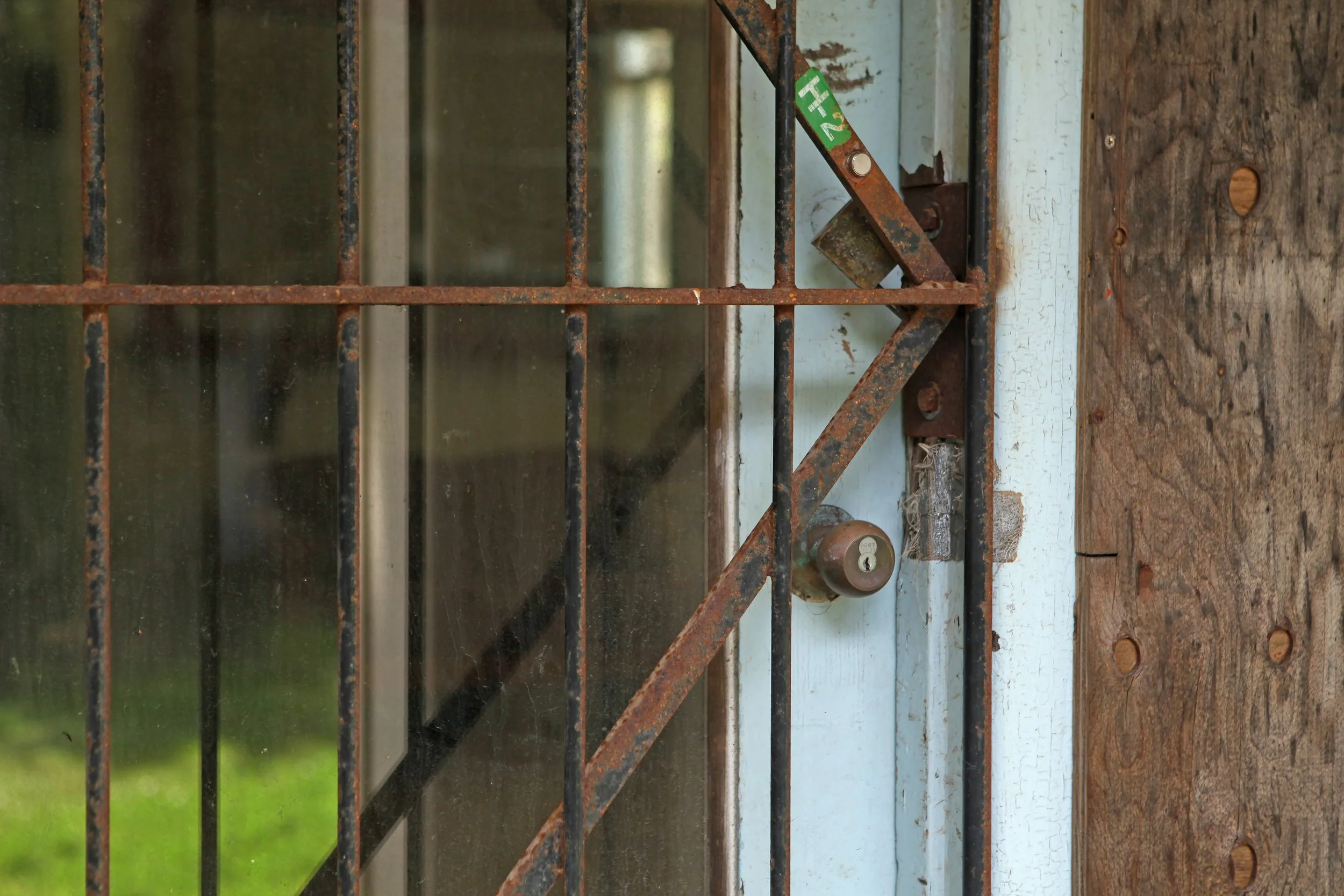
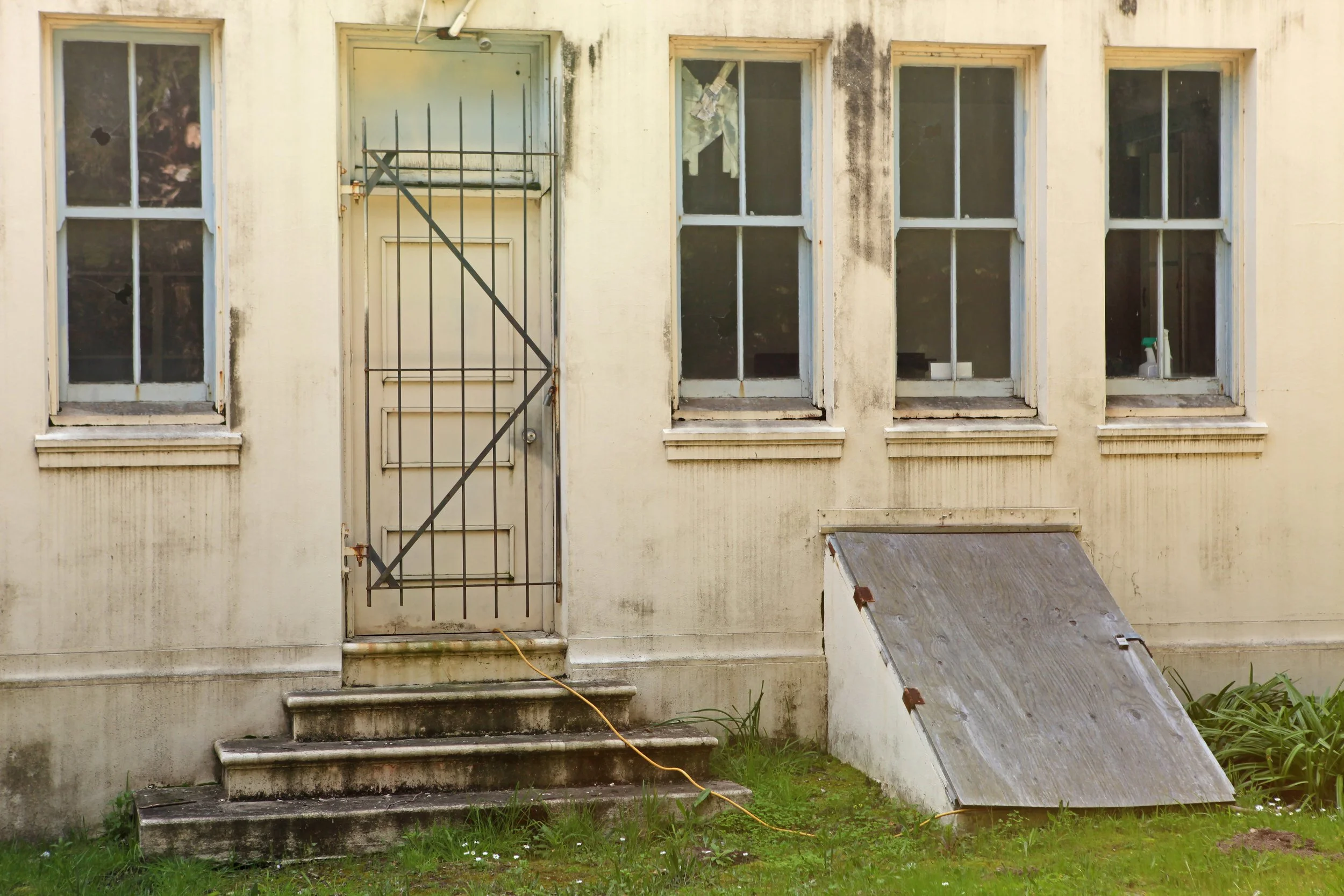
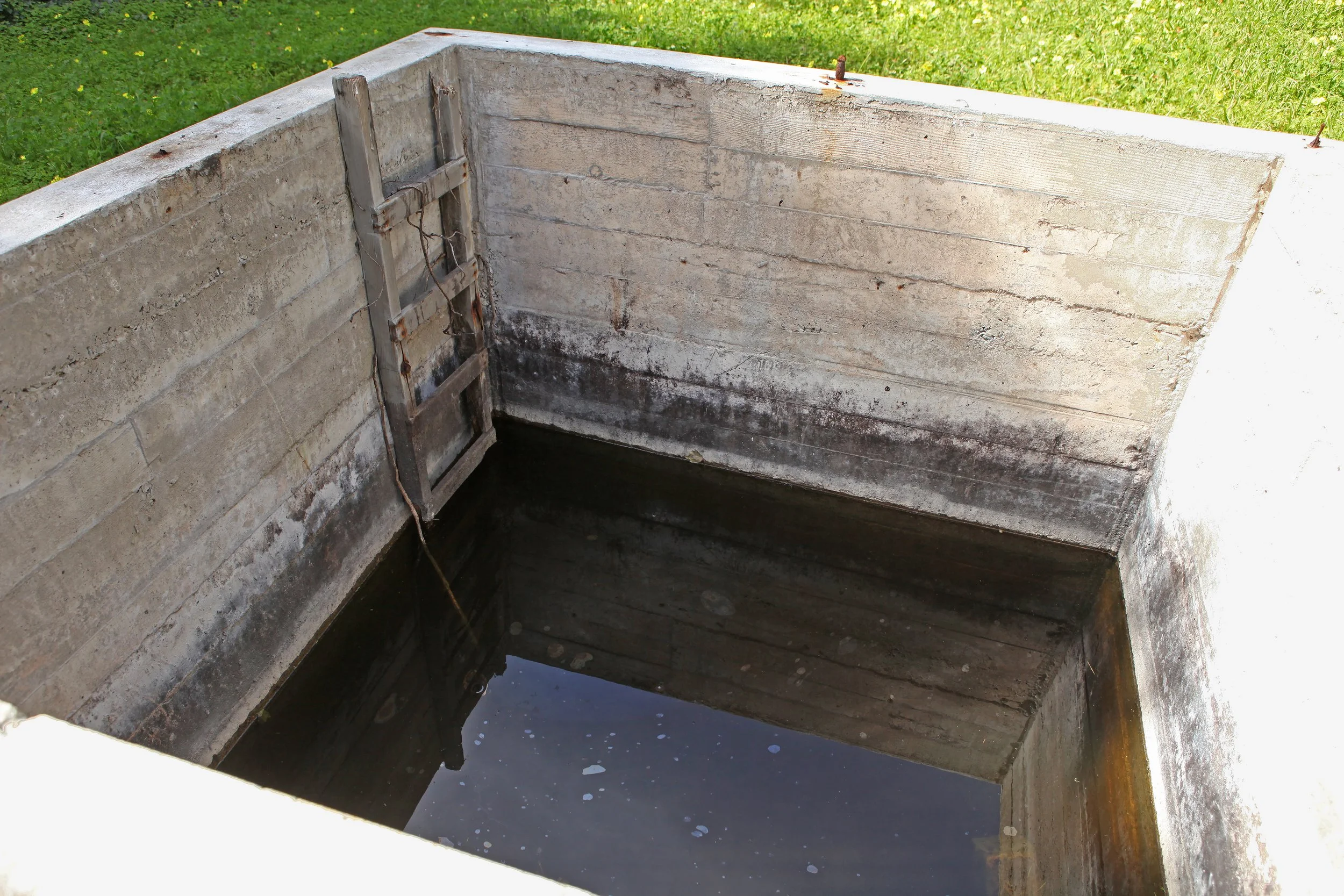
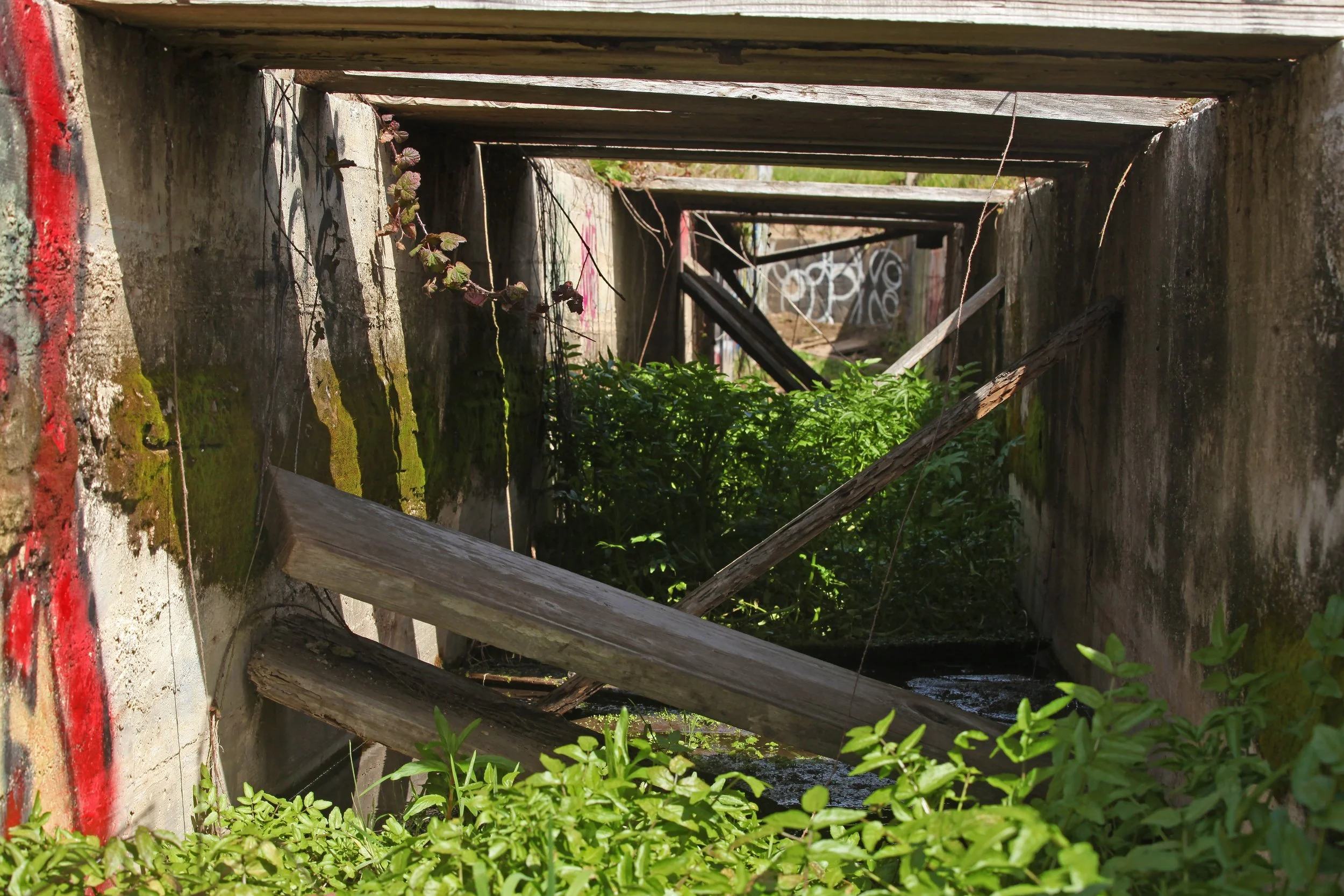
Photographic essay for Monuments and Entropy investigating entropic processes through material decay, environmental change, and the evolving relationship between the built and natural landscape.
Saqqara: Visualizing Uncertainty
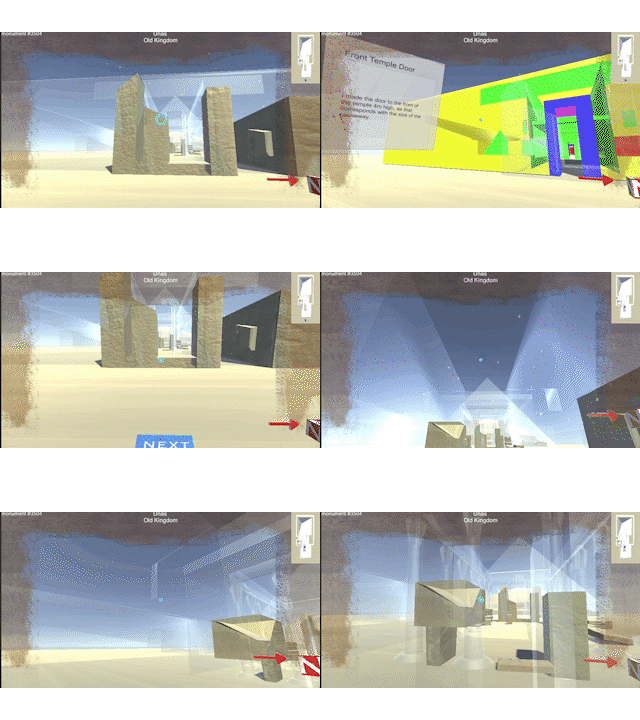
Saqqara: Visualizing Uncertainty is a prototype developed as part of a collaborative research project in Computational Media (CM290A: Data Visualization) at UC Santa Cruz. The project investigates how uncertainty can be represented within historical and archaeological visualization, using the Unas Pyramid at Saqqara, Egypt, as a case study.
The team developed an interactive 3D and 360° environment in Unity to explore how the site may have appeared at different points in time. Because archaeological evidence is incomplete, the reconstruction incorporates comparative data and evidence from related sites and historical periods. Rather than presenting a single definitive reconstruction, the prototype visualizes varying degrees of uncertainty, allowing viewers to distinguish between documented evidence and speculative interpretation.
This project examines how interactive visualization can communicate not only what is known about the past, but also what remains unknown. By incorporating uncertainty directly into the visual experience, the work challenges the expectation that historical reconstructions should appear complete or authoritative.
Creative Team: Rehaf Aljammaz, Beth Oliver, Abdul Jawad, and Carinne Knight
Faculty Supervisor: Angus Forbes
Advisor / Principal Investigator: Dr. Elaine Sullivan
Saqqara: Visualizing Uncertainty Prototype on Github for download and open in Unity
Saqqara Prototype Interface and Graphics:
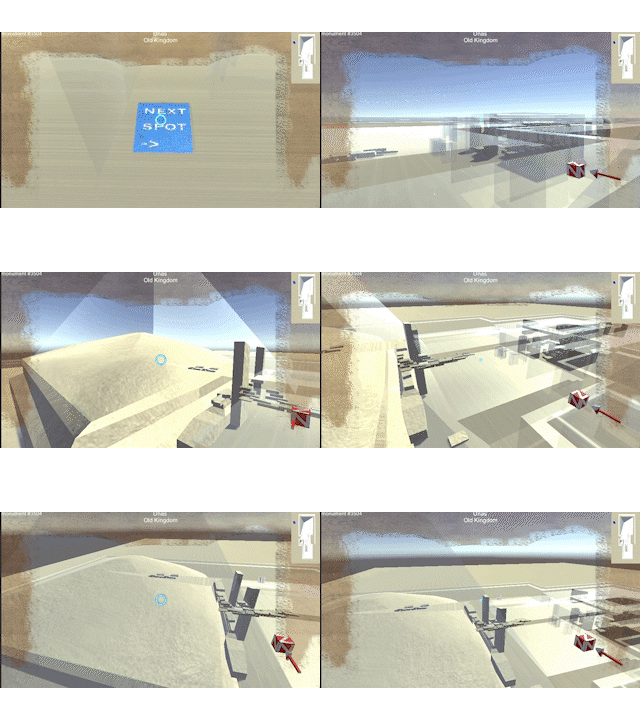
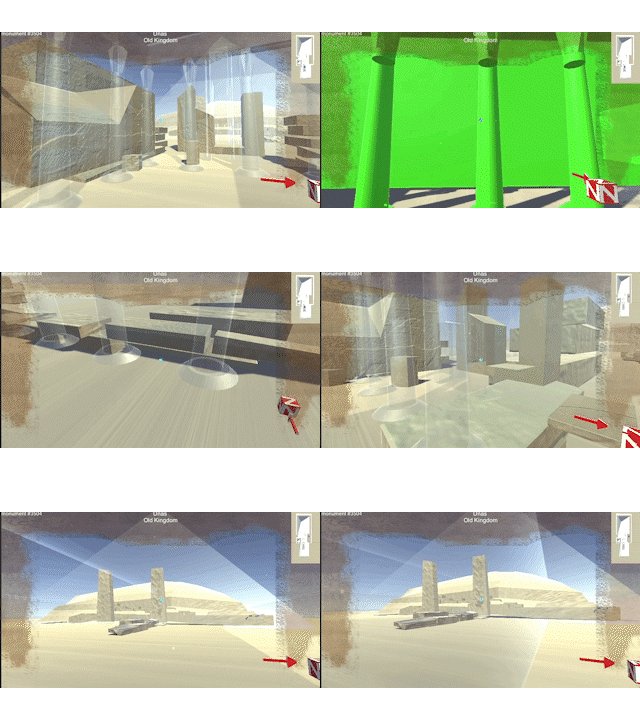

(Above): Positional compass graphic, illustrative 3D environment and directional arrow graphic.
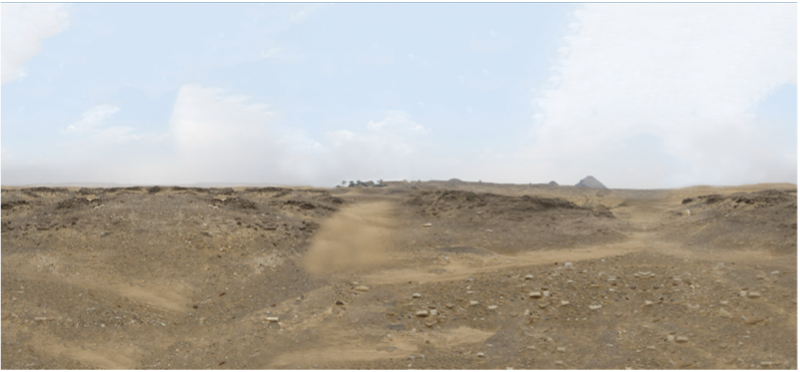
(At Right): An equirectangular 360° Skybox background environment of Unity simulation I composited with a series of 2:3 ratio photos collected on site by PI, Dr. Elaine Sullivan. The incomplete photographic record required reconstructing the surrounding environment to create a panoramic setting for the interactive project simulation.